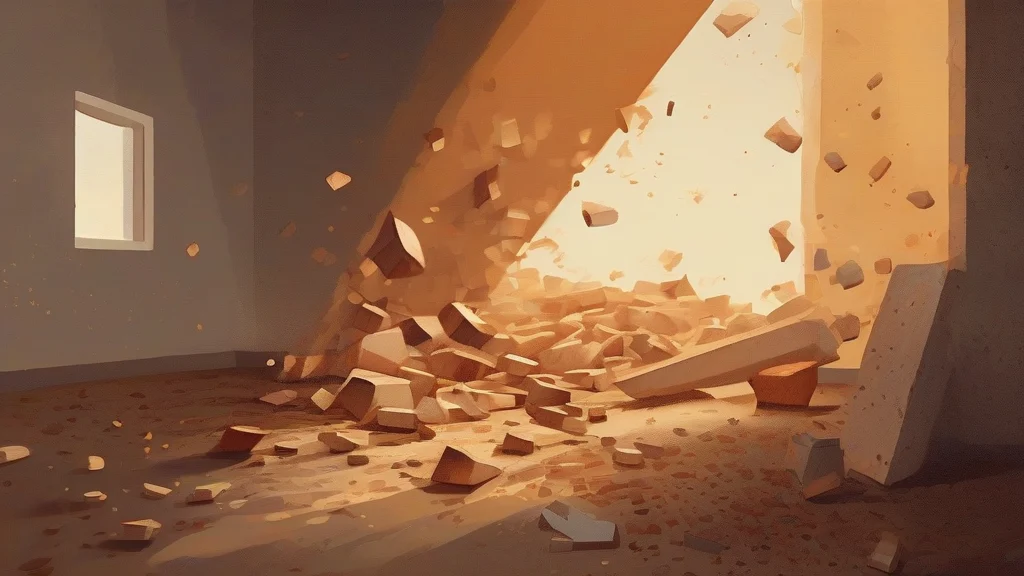
What does spalling mean?
Spalling is a process of surface deterioration where small pieces or chips break away from a material, often due to weathering, stress, or impact. This phenomenon is commonly observed in concrete, stone, and other brittle materials. The term is crucial in fields like construction and engineering, where the integrity of structures is paramount. Understanding spalling helps professionals assess and mitigate potential damage, ensuring the longevity and safety of buildings and infrastructure. It is characterized by the flaking or peeling of surface layers, which can expose underlying layers to further damage.
nounSpalling refers to the process of chipping or cracking of a material, especially concrete or stone, resulting in the breaking away of small pieces from the surface.
- The process of chipping or cracking of materials
- The resulting fragments or chips from such a process
"The engineer inspected the bridge for signs of spalling, particularly around the joints and supports."
"The spalling of the concrete was evident after the harsh winter."
"The team collected samples of the spalling for further analysis."
Reviewed by Deb Chak, Editor. AI-assisted content curated by RJS Tech Solutions LLP.
Etymology of spalling
The term 'spalling' originates from the word 'spall', which refers to a small chip or fragment of a material. The exact etymology of 'spall' is uncertain, but it is believed to be related to the Old English word 'spald', meaning 'a chip or splinter'. Over time, 'spalling' emerged as a distinct term to describe the process of materials breaking into small pieces.
How spalling is actually used
Commonly used in construction, engineering, and materials science to describe the deterioration of surfaces.