
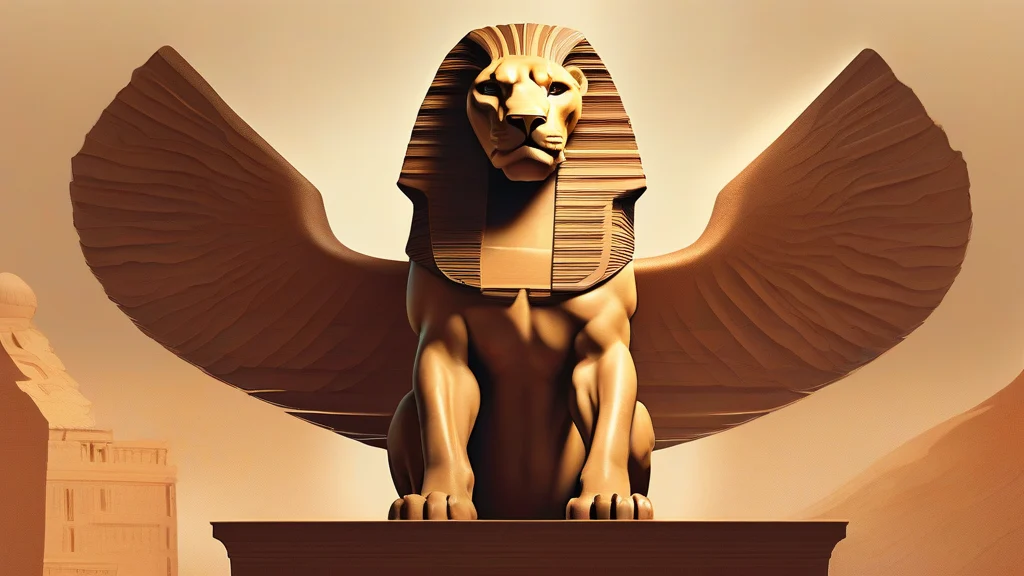
What does sphinx mean?
A sphinx is a legendary creature from Greek mythology, normally represented as having a human head, a lion's body, and sometimes wings. In the best-known myth, it challenges travellers with riddles and destroys those who cannot answer. The word also serves as a literary metaphor for an enigmatic person or a problem that resists straightforward analysis: a sphinx of motives, a corporate sphinx, or the sphinx of modern politics. It conveys mystery and difficulty more strongly than the ordinary word “mystery,” often suggesting that the solution is hidden behind deliberate obscurity or an exceptionally complex set of conditions. The expression “the riddle of the sphinx” refers to a question that is profound and difficult, while “sphinx-like” describes someone or something exceptionally inscrutable. In modern writing, the mythological sense is generally understood, but the figurative use is more common than a literal reference to the creature itself.
A mythological creature with a human head and a lion's body, traditionally associated with deadly riddles; also, figuratively, an enigmatic person or an especially difficult problem.
"The evidence suggested that the disappearance was not the work of a single criminal but a sphinx of intersecting motives."
The literal reference is chiefly literary and mythological. The figurative sense is used for people, situations, and problems that seem deliberately or exceptionally obscure.
To pose or solve a difficult riddle or enigmatic problem, especially in a literary or archaic context.
"The old puzzle invited travellers to sphinx one another with questions whose answers were hidden in the wording."
This is an uncommon literary verb rather than everyday usage.
The standard plural is sphinxes. The form sphinx is also sometimes used, especially in mythological or stylized contexts.
"The novel describes a temple guarded by sphinxes whose silence conceals an ancient warning."
The Sphinx was famous for asking a question that could not be answered in words alone—until a traveller solved it and walked away alive.
Reviewed by Deb Chak, Editor. AI-assisted content curated by RJS Tech Solutions LLP.
Etymology of sphinx
The English word comes through Latin and French from Ancient Greek Σπίγξ, the name of the mythological creature. The precise origin of the Greek name is uncertain, although ancient writers connected it with the idea of strangling or choking. The English spelling and pronunciation became established during the early modern period, when classical mythology was widely studied and retold.
Related word forms
How sphinx is actually used
Literally, the term most often refers to the creature of Greek mythology, especially in retellings of the Oedipus story. Figuratively, it is literary and somewhat dramatic, suggesting profound or deliberate inscrutability; it is not normally used for an ordinary puzzle.