
What does stalemate mean?
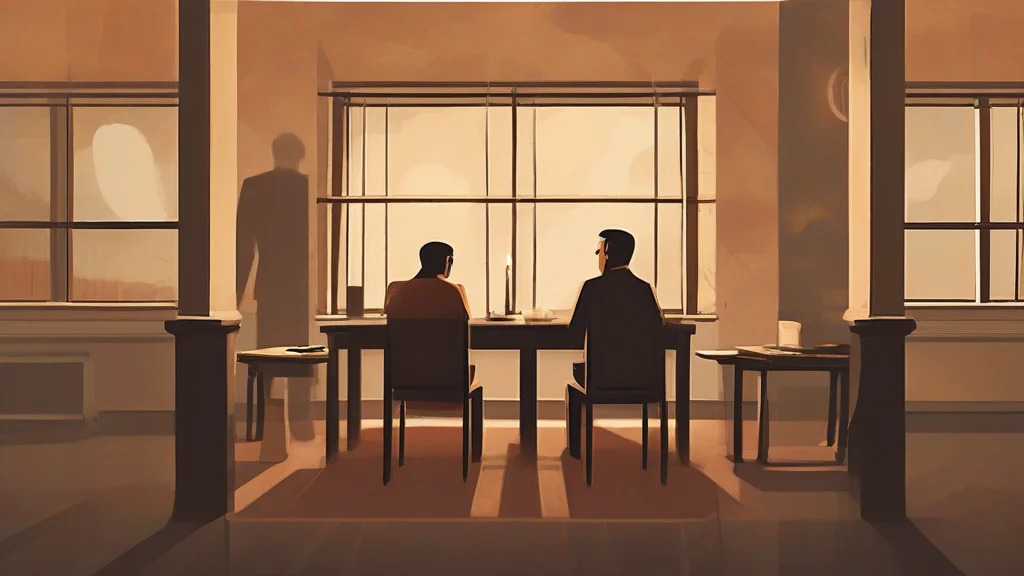
Stalemate describes a situation in which two opposing sides are unable to make progress, usually because neither will move or compromise. The word often appears in political, diplomatic, business, and legal contexts, where negotiations have reached an impasse and further discussion seems unlikely to produce agreement. Although a stalemate implies a standoff, it does not necessarily mean that the dispute has ended; either side may later resume negotiations or find a way to break the deadlock. In chess, the term has a precise meaning: the player whose turn it is has no legal move, but their king is not in check, so the game is immediately drawn. This contrasts with checkmate, in which the king is attacked and the player has no legal response. Stalemate is useful because it captures not simply defeat or victory, but a situation defined by mutual obstruction and a temporary inability to act.
A situation in which neither of two opposing sides can make progress, especially in negotiations, politics, or competition; in chess, a position in which the player to move has no legal move but is not in check, resulting in a draw.
"The election campaign reached a stalemate after both candidates refused to concede."
A countable noun commonly used figuratively for a deadlock between opposing parties.
To bring a situation into a deadlock, or to become unable to make progress.
"The two departments stalemated over the budget and postponed the decision."
Can be used transitively, as in 'stalemate the opposition,' or intransitively, as in 'the negotiations stalemated.'
The usual plural form; one may say 'the talks ended in a stalemate' or 'the parties reached a stalemate.'
"Repeated stalemates in the negotiations delayed the agreement."
In chess, the losing side can still cause a draw by creating a stalemate: no legal move, no check, and no winner.
Reviewed by Deb Chak, Editor. AI-assisted content curated by RJS Tech Solutions LLP.
Where does stalemate come from?
The word developed in English-language chess usage in the early nineteenth century. It was formed by combining stale, in an older sense meaning ineffective or unable to make progress, with mate, the chess term associated with checkmate. The figurative use for political and diplomatic deadlocks followed the chess sense.
Related word forms
How stalemate is actually used
Stalemate is common in formal and journalistic writing, particularly in discussions of politics, diplomacy, business, and labor disputes. It is often countable and can be used as a noun or as a transitive or intransitive verb.
Easily confused with stalemate
Checkmate means the king is in check and cannot be moved to safety, ending the game with a winner, whereas stalemate means the player has no legal move but is not in check, resulting in a draw.