
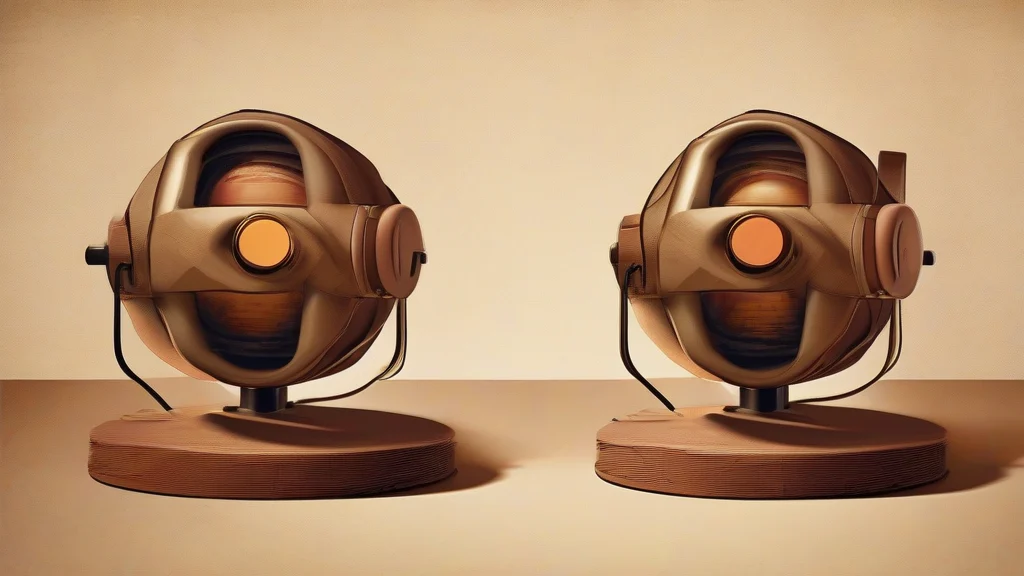
What does stereoscopy mean?
Stereoscopy is the technique of creating or presenting an illusion of three-dimensional depth by supplying two slightly different views, one to each eye. When the views correspond appropriately, the visual system interprets their small differences as depth rather than merely seeing two separate pictures. The technique is associated with early stereoscopes, stereoscopic photography, and later cinema, but it also underlies modern 3-D displays, imaging systems, and some forms of virtual reality. In vision science, related terms distinguish the display method from stereopsis, the perceptual ability to derive depth from binocular differences. Stereoscopy can also refer broadly to viewing paired images to obtain this effect. The word is chiefly technical and appears in photography, film, ophthalmology, neuroscience, and display technology. Although less familiar than the adjective stereoscopic, it is useful when naming the overall process rather than a particular picture, display, or percept.
nounThe technique of creating or presenting an illusion of three-dimensional depth by using two slightly different images or views, one for each eye. It is also used more broadly for viewing paired images in this way.
- The technique of producing or viewing an image with an illusion of three-dimensional depth by presenting two slightly different views, one to each eye.
"The museum used stereoscopy to turn two archival photographs into an immersive three-dimensional scene."
"Early filmmakers explored stereoscopy to create convincing depth without using moving cameras."
"The ophthalmologist explained how deficiencies in stereoscopic vision can affect depth perception."
The plural is rare and is used for distinct stereoscopic techniques, systems, or presentations.
"Early stereoscopies used paired photographs to produce convincing depth."
Long before digital 3-D, a pair of carefully matched images could trick the brain into seeing depth.
Reviewed by Deb Chak, Editor. AI-assisted content curated by RJS Tech Solutions LLP.
Where does stereoscopy come from?
The word was formed in the nineteenth century from stereo-, scope, and the suffix -y, denoting the technique or practice associated with a stereoscope. Stereoscope combines Greek stereos, meaning "solid," with Greek skopos, meaning "watcher," and was introduced by Charles Wheatstone in 1838. The same lineage produced stereoscopic, stereopsis, and stereoscopist.
How stereoscopy is actually used
This is chiefly a technical term used in photography, cinema, ophthalmology, neuroscience, and display technology. When naming the general method or process, use "stereoscopy"; use "stereoscopic" to modify a particular image, display, or kind of vision.
Easily confused with stereoscopy
Stereoscopy is the technique of presenting or viewing paired images, whereas stereopsis is the visual system's perception of depth from binocular differences.