
What does stooking mean?
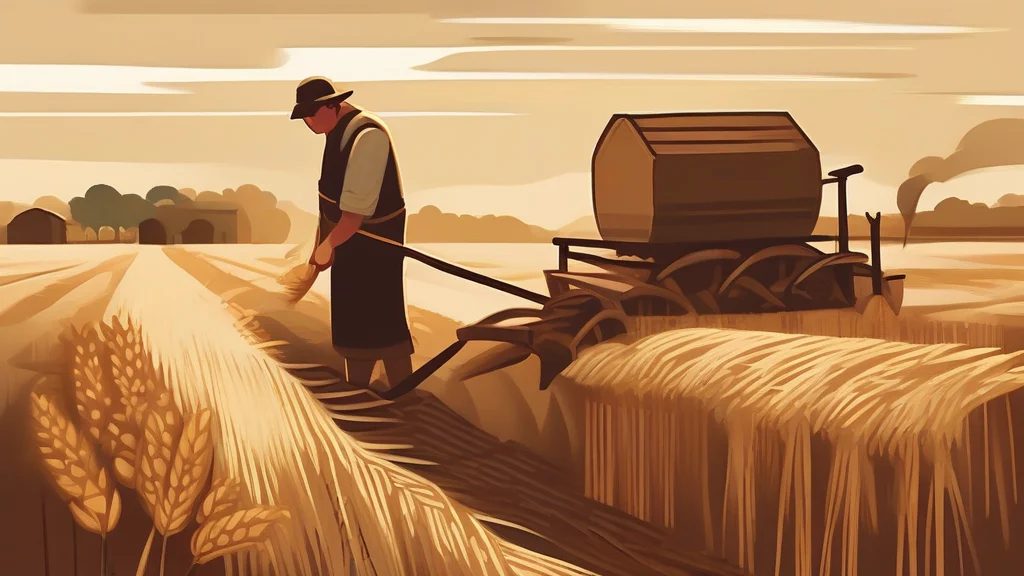
Stooking is the agricultural practice of tying cut grain into sheaves and standing those sheaves upright in the field. Traditionally, grain was reaped with a sickle or scythe and then bound into bundles so that it would dry and could later be threshed. In Scotland and parts of northern England, stooking was an important part of the harvest and required considerable labor, particularly when rain threatened. Today, combine harvesters have made the process largely obsolete, so the word is mainly encountered in regional speech, historical writing, and accounts of traditional rural life. Although it resembles “stoking,” it has an unrelated agricultural meaning. Stoking refers to feeding or maintaining a fire, whereas stooking concerns the bundling and drying of harvested grain.
nounThe practice of tying cut grain into sheaves and setting them upright in the field. It may also refer more generally to gathering harvested stalks into such bundles.
- The practice of tying harvested grain into sheaves and placing them upright in the field.
- The activity of gathering or stacking cut stalks, especially as part of traditional harvesting.
"Harvesters continued stooking the wheat until dusk."
"After cutting the barley, the workers began stooking it in long rows."
"Stoking sheaves in wet weather required careful work to keep the grain dry."
The activity is normally treated as uncountable. The plural stookings is uncommon but can distinguish separate instances or quantities of the work.
"The two farm families completed their stookings before evening."
Before combine harvesters, farmers had to stook the grain quickly because rain could ruin crops left lying in the field.
Reviewed by Deb Chak, Editor. AI-assisted content curated by RJS Tech Solutions LLP.
Where does stooking come from?
Stoking is formed from the regional noun stook, meaning a sheaf or bundle of grain; the base word appears in Middle English and is also preserved in Scots and northern English dialects. It developed within the vocabulary of traditional harvesting, in which cut stalks were bound and placed in standing sheaves before being threshed or transported.
Related word forms
How stooking is actually used
The word is chiefly associated with Scotland and northern England and reflects traditional harvesting practice. It is relatively uncommon in modern general English, although it remains understood where traditional farming vocabulary is used.
Easily confused with stooking
Stooking is the agricultural practice of binding grain into sheaves, whereas stoking means feeding or tending a fire.