
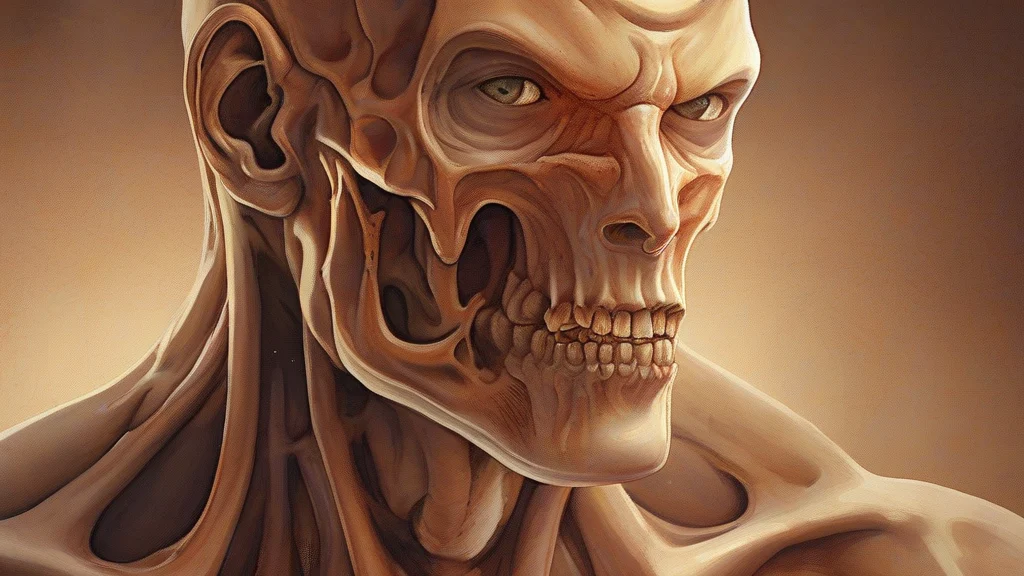
What does submaxillary mean?
Submaxillary describes anything situated beneath the jaw and, in anatomical contexts, refers to the submandibular gland, one of the major salivary glands. The term occurs especially in the established phrase “submaxillary gland,” once widely used in medical literature and examination. A submaxillary or submandibular swelling may therefore indicate a problem involving a salivary gland, nearby tissue, or the structures beneath the jaw. Although “submaxillary” remains a precise and familiar anatomical term, modern medical usage increasingly favors “submandibular,” which describes the gland’s location more directly and avoids comparison with the maxilla, the upper jawbone. The word is formal and specialized rather than part of everyday vocabulary, but it is useful when reading older clinical descriptions, diagnostic reports, or historical medical sources.
Situated beneath the jaw; of or relating to the submandibular gland.
"The ultrasound revealed a small lesion in the submaxillary tissue."
Most often encountered in medical and anatomical contexts.
The submandibular gland, especially when considered as a salivary gland.
"The submaxillary was enlarged and tender to palpation."
This noun is now somewhat dated; “submandibular gland” is the usual contemporary term.
The plural is uncommon because modern medical writing usually says “submandibular glands.”
"Both submaxillaries were examined during the consultation."
“Submaxillary” is an older anatomical name for the submandibular gland, the salivary gland that sits beneath the lower jaw.
Reviewed by Deb Chak, Editor. AI-assisted content curated by RJS Tech Solutions LLP.
Where does submaxillary come from?
“Submaxillary” was formed in the early 19th century from the Latin prefix sub-, meaning “under” or “beneath,” and maxillary, meaning “relating to the jaw” or “pertaining to the maxilla.” The maxillary element ultimately comes from Latin maxilla, the upper jawbone. The compound originally referred to structures below the jaw and later became an established name for the salivary gland now generally called the submandibular gland.
Related word forms
How submaxillary is actually used
This is primarily a medical and anatomical term. In contemporary clinical usage, “submandibular” is generally preferred to “submaxillary,” though both remain understood.
Easily confused with submaxillary
Maxillary means relating to the upper jaw or maxilla, whereas submaxillary means situated beneath the jaw or relating to the submandibular gland.