
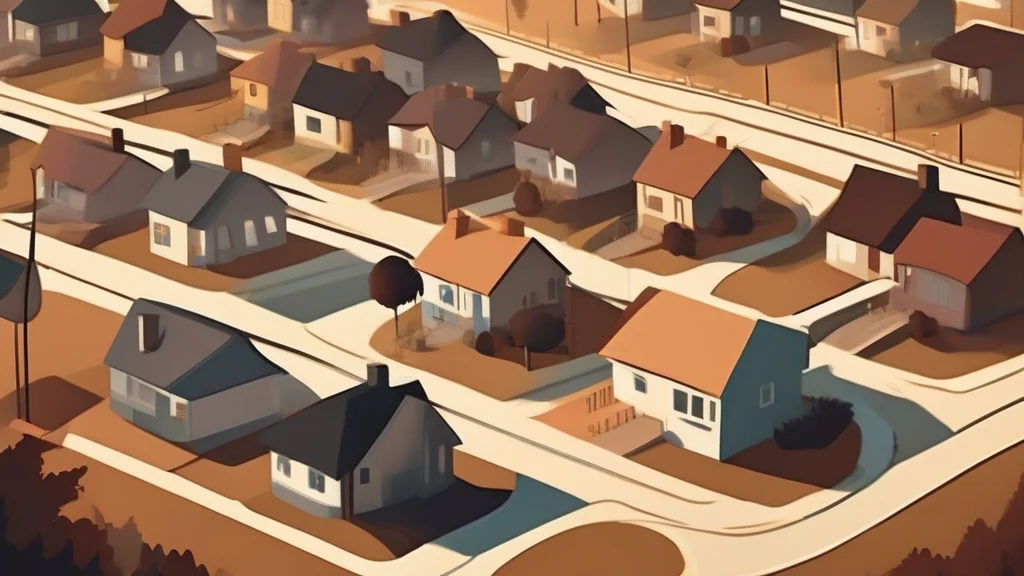
What does suburbanisation mean?
Suburbanisation is the movement of people, homes, businesses, and other activity from cities or rural districts into suburban areas. It often accompanies the outward expansion of a metropolis and the conversion of agricultural or otherwise undeveloped land into low-density housing. The process is closely associated with urban sprawl, increased reliance on private cars, and the separation of residential areas from workplaces and civic centres. Suburbanisation may refer either to individual decisions by households and businesses to relocate or to the broader demographic and geographical transformation produced by such decisions. In Britain, Australia, and other countries using British spelling conventions, the term is commonly written with “-isation”; American usage often prefers “-ization.” It is especially prominent in discussions of twentieth-century urban growth, post-war housing, regional planning, and environmental change.
nounThe process by which people, homes, and businesses move from urban or rural areas into suburban communities. It can also refer to the spread of suburban characteristics over wider areas.
- The movement of population, housing, and other activity from urban or rural areas into suburbs.
- The spread of low-density suburban development across an area.
"Post-war suburbanisation transformed many communities on the outskirts of expanding cities."
"Rapid suburbanisation has put pressure on transport infrastructure in many metropolitan regions."
"The expansion of commuter villages reflects the continued suburbanisation of the countryside."
Rare; the process is normally treated as a mass noun.
"The study compares patterns of suburbanisation in several metropolitan regions."
Suburbanisation did not merely create new suburbs: it reshaped how cities, transport, housing, and daily life were organised.
Reviewed by Deb Chak, Editor. AI-assisted content curated by RJS Tech Solutions LLP.
Where does suburbanisation come from?
The word was formed in the early twentieth century from “suburban” and the suffix “-isation,” which indicates a process of making or developing something. “Suburban” ultimately comes from Latin suburbanus, meaning “under the city,” from sub- (“under”) and urbs (“city”). The related word “urbanisation” was formed in the same way from the shared Latin root represented by “urban.”
Related word forms
How suburbanisation is actually used
Common in British, Australian, and American English. British spellings generally use “-isation,” while American usage often uses “-ization.” The term is primarily used in academic, planning, demographic, and historical contexts.
Easily confused with suburbanisation
Urbanisation is the growth of cities and the movement of people into urban areas, whereas suburbanisation describes movement or development into suburban areas.