
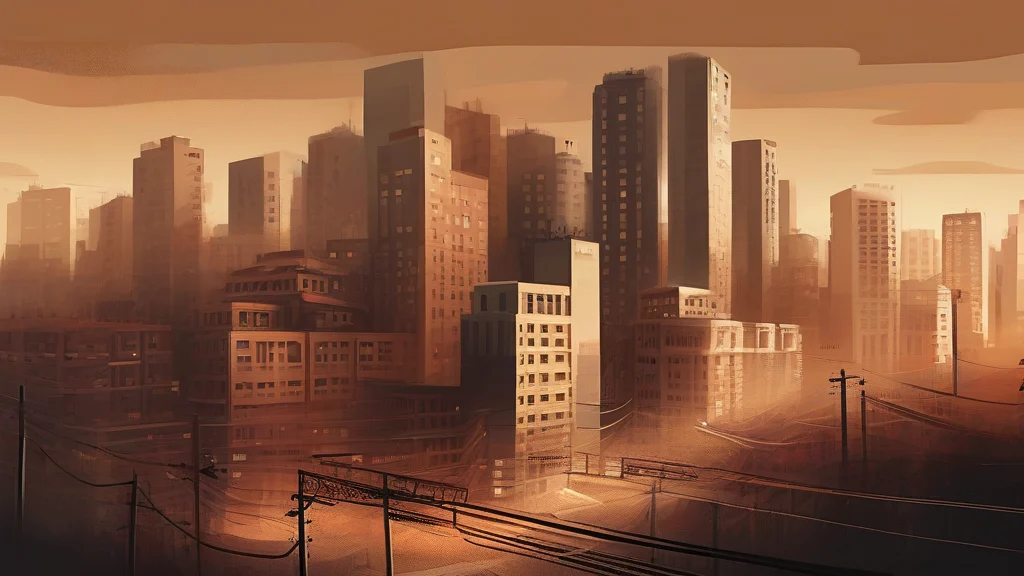
What does urbanisation mean?
Urbanisation is the process by which population, employment, and other activities become concentrated in towns and cities, and by which those settlements expand and acquire more urban forms. In demographic use it often refers especially to people moving from rural areas to urban centres; in planning and historical contexts it also includes the physical transformation of land into housing, transport networks, and other city infrastructure. The term is associated with industrialisation and rapid urban growth, but it is not automatically negative: its effects depend on planning, resources, and policy. It can raise questions about housing, inequality, transport, and the environment while also supporting economic and cultural exchange. Urbanisation is useful for describing a broad social and spatial transformation rather than a single event such as the opening of a factory or the founding of a town. The British spelling is urbanisation; American English commonly uses urbanization.
nounThe process by which population, employment, and other activities become concentrated in towns and cities, or by which settlements develop more urban characteristics. It may also refer to the expansion and transformation of towns and cities into densely populated, infrastructure-rich urban areas.
- The demographic concentration of people in towns and cities, especially through rural-to-urban migration.
- The growth and transformation of settlements into urban areas marked by dense population, infrastructure, and city-based activity.
"Rapid urbanisation has transformed the region, bringing both economic opportunity and severe pressure on housing and transport."
"Decades of rapid urbanisation have pushed millions of residents into the metropolitan area."
"The research examines how urbanisation and industrial development reshaped nineteenth-century cities."
This plural is uncommon but standard, typically distinguishing separate processes of urbanisation in different places or periods.
"Urbanisations in different cities have followed distinct patterns of planning and migration."
The Industrial Revolution turned towns into industrial cities, helping launch the large-scale urban transformation still reshaping the world today.
Reviewed by Deb Chak, Editor. AI-assisted content curated by RJS Tech Solutions LLP.
Where does urbanisation come from?
Urbanisation was formed in 19th-century English from urban and the suffix -isation, meaning a process of making or becoming. Urban traces through French urban to Latin urbanus, meaning “of or belonging to a city,” ultimately from urbs, meaning “city.” The same Latin root underlies cognates including urbane, urbanity, and suburban, while the -isation formation also appears in numerous English names for processes of transformation.
Related word forms
How urbanisation is actually used
This is a formal and broadly neutral noun, especially common in demographic, geographic, planning, and historical writing. Its connotations may be positive, negative, or mixed depending on context, particularly when associated with overcrowding, inequality, environmental pressure, or economic opportunity.
Easily confused with urbanisation
This is the American spelling of the same word; both forms refer to the process of becoming or developing as an urban area.
“Urbanisation” names the broader process, whereas “urbanise” is the verb describing the action of making an area or population urban.