
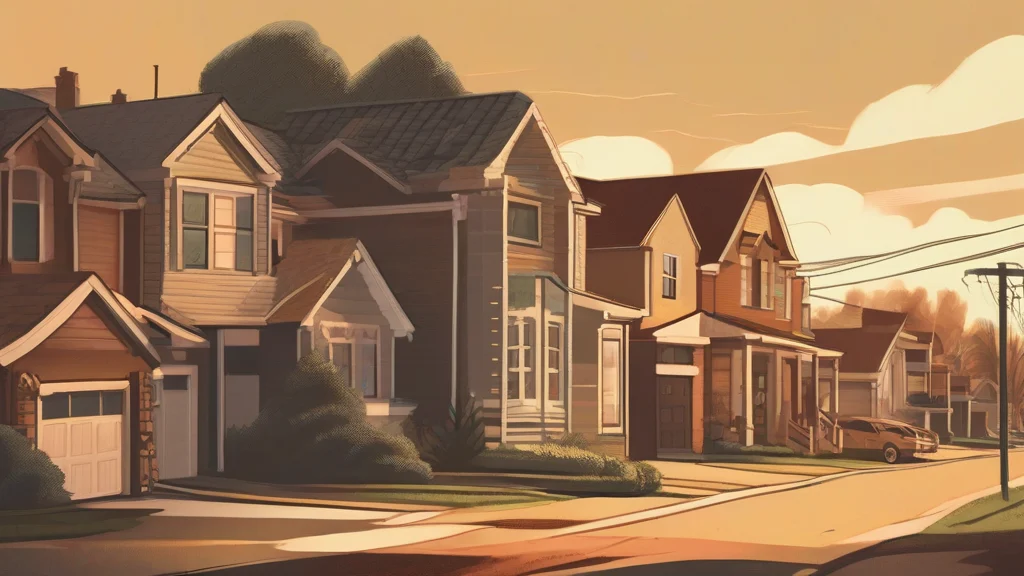
What does suburbanization mean?
Suburbanization names the demographic and geographical process by which residents, housing, and development move from central cities to suburban areas, especially along the urban fringe. It also describes the resulting spread of low-density residential development beyond city boundaries. The term is common in geography, demography, urban planning, and social history, especially in accounts of postwar growth in North America and other predominantly urban societies. Depending on context, it can carry neutral descriptive force or signal concerns about sprawl, automobile dependence, and weakening of central neighborhoods without saying those outcomes are inevitable. Unlike urbanization, which concentrates activity in cities, suburbanization describes movement outward from them. It is useful because it names both a population movement and the physical reshaping of metropolitan landscapes that follows it.
nounThe demographic and geographical process by which people, housing, and development move from central cities to suburban areas. It can also refer to the spread of suburban residential development beyond a city's built-up boundaries.
- The movement of people, housing, and development from central cities to suburban areas.
"Rapid suburbanization transformed the rural edges of the city into sprawling residential districts."
"Rapid suburbanization transformed the rural edges of the city into sprawling residential districts."
"Historians linked postwar suburbanization to highway construction, mass homeownership, and rising automobile use."
The plural is rare and is used mainly for distinct processes or separate historical examples of suburbanization.
"The study compares two distinct suburbanizations in metropolitan areas with very different planning histories."
Postwar suburbanization helped turn the private car from a luxury into a routine necessity.
Reviewed by Deb Chak, Editor. AI-assisted content curated by RJS Tech Solutions LLP.
Where does suburbanization come from?
The word combines the adjective suburban with the suffix -ization and emerged in the 19th century as residential growth increasingly extended beyond urban centers. Suburban itself derives from Latin suburbium, an outlying district or part of a city, formed from sub- meaning 'under' or 'below' and urbs meaning 'city'. This Latin inheritance is reflected in related forms such as suburb, suburban, and suburbia.
Related word forms
How suburbanization is actually used
Most common in academic, demographic, urban-planning, and historical writing in both British and American English. It is generally neutral when naming the process, but it may carry evaluative implications when associated with sprawl, automobile dependence, or the weakening of central neighborhoods.
Easily confused with suburbanization
Urbanization is the growth and concentration of cities and their populations, whereas suburbanization describes movement and development outward from cities into suburban areas.