
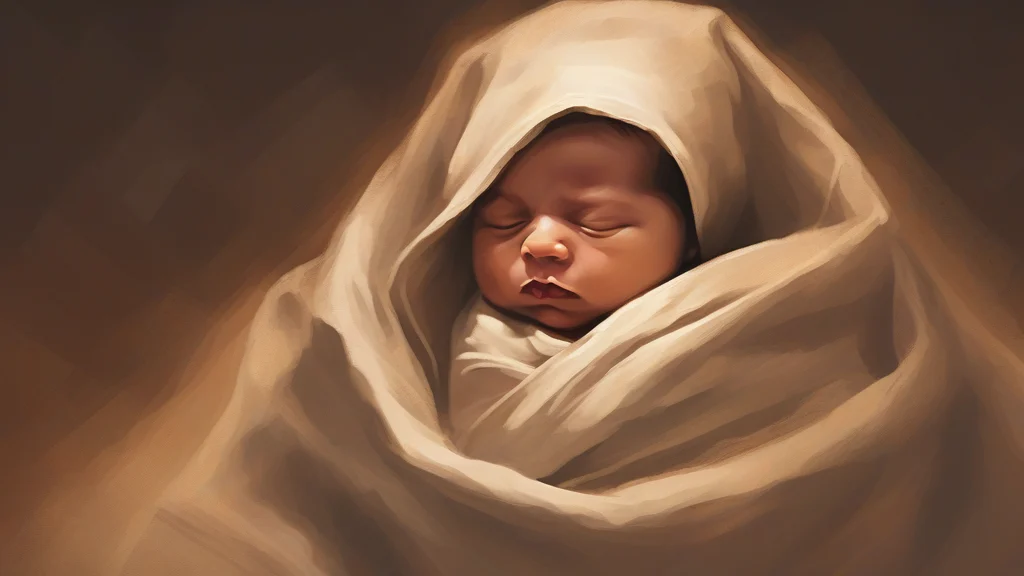
What does swaddling mean?
Swaddling is the practice of wrapping a baby closely in cloth, bands, or blankets, traditionally to keep the infant warm, secure, and calm. In modern contexts, it most often refers to a wrapping that encloses the body from the shoulders downward. The word can also describe wrapping another person or object securely. Figuratively, swaddling means enclosing someone in restrictions or treating them so protectively that their independence is impaired, often with an implication of excessive control. Although medical and child-care guidance has changed over time and swaddling practices vary among cultures, the word remains strongly associated with the close cloth wrapping of newborns. Its range of meanings—from a familiar nursery practice to a metaphor for institutional or emotional confinement—makes it a vivid example of how an ordinary physical action can acquire wider social significance.
The act of wrapping a baby, person, or object closely in cloth, bands, or bandages; figuratively, restrictive or overly protective control.
"The old practice of swaddling babies was common in many traditional cultures."
The literal sense is chiefly associated with wrapping infants. The figurative sense is generally critical or disapproving.
To wrap a baby, person, or object closely in cloth, bands, or bandages.
"The midwife was swaddling the baby before handing her to the mother."
This is the present participle and gerund of swaddle.
Relating to or consisting of cloth used for wrapping a baby closely.
"She folded the muslin swaddling cloth around the infant."
Usually used before a noun, especially in the expression swaddling clothes.
Rare; the noun is normally used in the singular or, more commonly, as an uncountable process noun.
"The historical record describes several different swaddlings used by the community."
From a snug wrap around an infant to a metaphor for smothering control, swaddling has moved from the nursery into the language of power and restriction.
Reviewed by Deb Chak, Editor. AI-assisted content curated by RJS Tech Solutions LLP.
Where does swaddling come from?
The word descends from Middle English forms such as swedelen and swadlen, meaning to wrap or bind in cloth. The modern spelling developed from swaddle, and its present participle is swaddling; related English forms include swaddled and swaddlecloth. The vocabulary belongs to a wider Germanic family of words associated with wrapping or binding.
Related word forms
How swaddling is actually used
In its literal sense, swaddling is chiefly associated with newborn infants and traditional baby-care practice. Its figurative use often carries a negative or critical connotation, suggesting that someone is being unduly controlled, constrained, or shielded from independent action. As an attributive form, it normally precedes a noun.
Easily confused with swaddling
Swaddling means wrapping someone or something in cloth, whereas waddling means walking with an unsteady, rocking gait.