
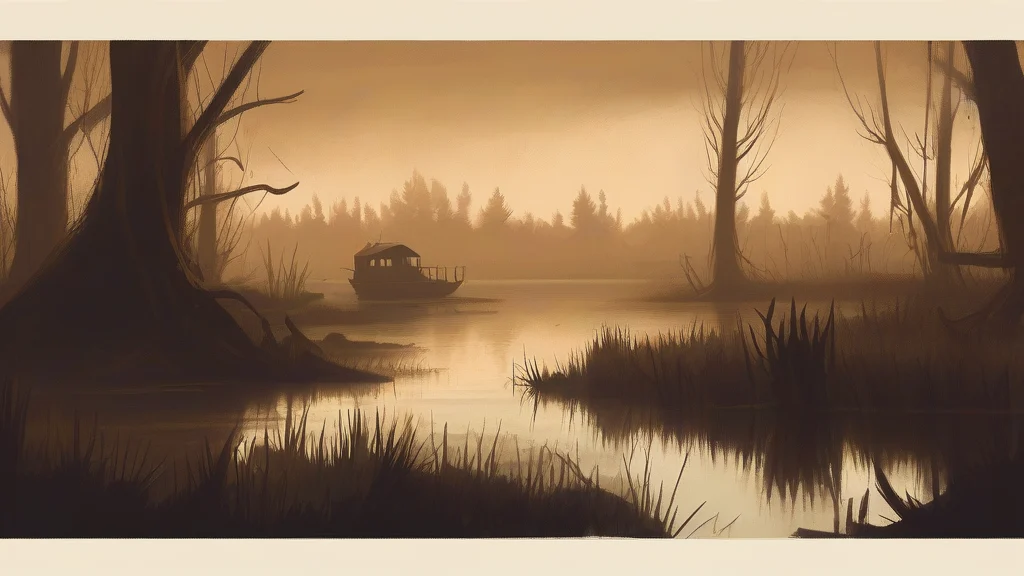
What does swampier mean?
Swampier is the comparative form of the adjective swampy, meaning more like a swamp. It is used when comparing two places, surfaces, paths, or conditions and indicating that the first is more saturated, muddy, marsh-like, or difficult to traverse than the other. The word’s basic sense is physical: rain can make a trail swampier, while low-lying land may become swampier after flooding. It can also be used figuratively for a situation, debate, or organization that is increasingly complicated, murky, or hard to navigate. Because it is a regular comparative, swampier contrasts with swampy and is paired with swampiest for the superlative. The ending -ier follows a familiar English pattern found in comparisons such as dirtier and friendlier. In formal writing, the phrasing “more swampy” may occasionally be preferred for clarity, but swampier is standard and idiomatic in ordinary English.
adjectiveThe comparative of swampy; more like a swamp, or more wet, muddy, marshy, or difficult to traverse.
- More like a swamp; more wet, muddy, marshy, or difficult to traverse.
- Figuratively, more complicated, murky, or difficult to understand or navigate.
"The trail became swampier after several days of rain."
"The ground grew swampier after the storm."
"The political discussion became swampier as more conflicting details emerged."
Swampier is a tiny linguistic escalator: add the comparative ending -ier to swampy and the landscape gets one step wetter.
Reviewed by Deb Chak, Editor. AI-assisted content curated by RJS Tech Solutions LLP.
Etymology of swampier
Swamp is an English word recorded in Middle English, although its precise earlier source is uncertain. The adjective swampy was formed from swamp, and the comparative suffix -ier produced swampier. The same English family also includes swampland and swampiness; no separate inherited cognate is needed to explain the modern form.
Related word forms
How swampier is actually used
Swampier is a standard comparative adjective and is neutral in register. It is used mainly for physical terrain or conditions, but can also describe a situation that is increasingly murky or difficult to manage.