
What does swampland mean?
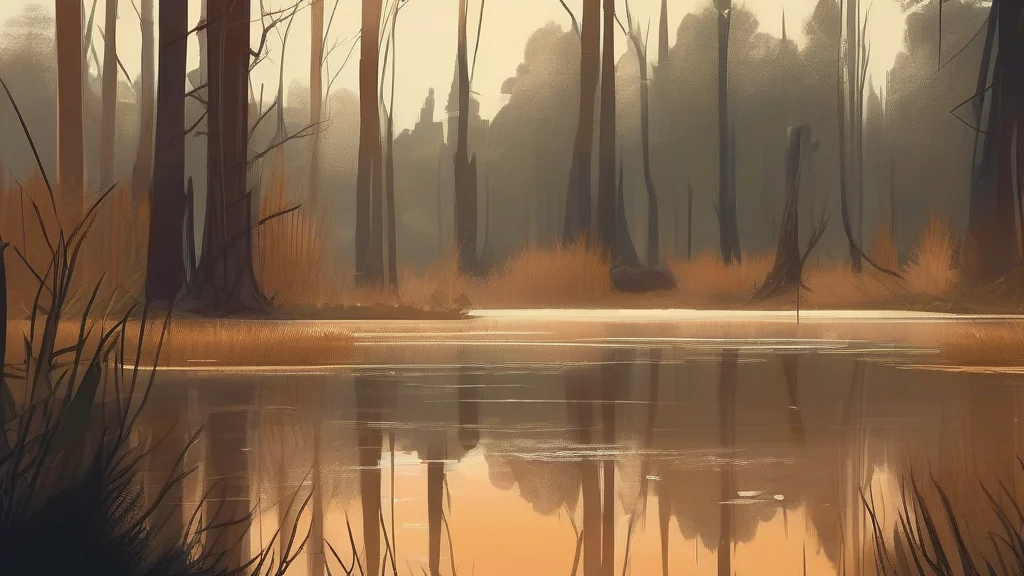
Swampland denotes an area of low, wet ground that is covered by shallow water or saturated throughout much of the year, often with dense marsh vegetation and muddy soil. In its literal use, the word is most often associated with landscapes in which water, reeds, and difficult footing dominate. In figurative English, especially political language, swampland describes an environment marked by corruption, obstruction, questionable dealings, or confusion. This extended meaning draws on the image of a swamp as a place that is difficult to traverse and easy to become trapped in. The word is consequently more evocative than a general reference to difficult terrain and carries a distinctly negative moral or political implication. Together, its literal and figurative senses make it useful for describing both a distinctive wetland landscape and an institutional or social environment that seems murky, tangled, and resistant to clear progress.
An area of low-lying, wet, and often marshy land.
"The village was surrounded by swampland and could be reached only by boat during the floods."
Usually used for terrain that is waterlogged or swampy rather than merely damp.
A figurative term for a morally murky, politically corrupt, or otherwise chaotic environment.
"The report describes years of bureaucratic swampland surrounding the reform effort."
The figurative sense is especially established in political and journalistic usage and is strongly disapproving.
The plural is used for distinct areas of swampy land or, figuratively, separate murky political or social environments.
"The region contains several remote swamplands."
One word can turn a quiet landscape into a political trap: “swampland” now suggests both muddy ground and the murky world of backroom politics.
Reviewed by Deb Chak, Editor. AI-assisted content curated by RJS Tech Solutions LLP.
Where does swampland come from?
Swampland is a compound formed in English by combining the longstanding word “swamp,” which has Germanic ancestry, with “land.” The compound’s sense as an area of wet, swampy ground developed naturally from the meanings of its two components. Its figurative use for a morally or politically murky environment is a later metaphorical extension based on the difficulty of moving through dense swamp.
Related word forms
How swampland is actually used
The literal sense is relatively straightforward, while the figurative sense is strongly negative and especially common in political and journalistic contexts.
Easily confused with swampland
Marshland is a general term for wet, low-lying ground, while swampland more specifically evokes thick, waterlogged terrain associated with swamps.
A wetland is any ecosystem where saturated or flooded conditions predominate, including marshes, bogs, and coastal areas; swampland is a narrower type of wet terrain.