
What does swamp mean?
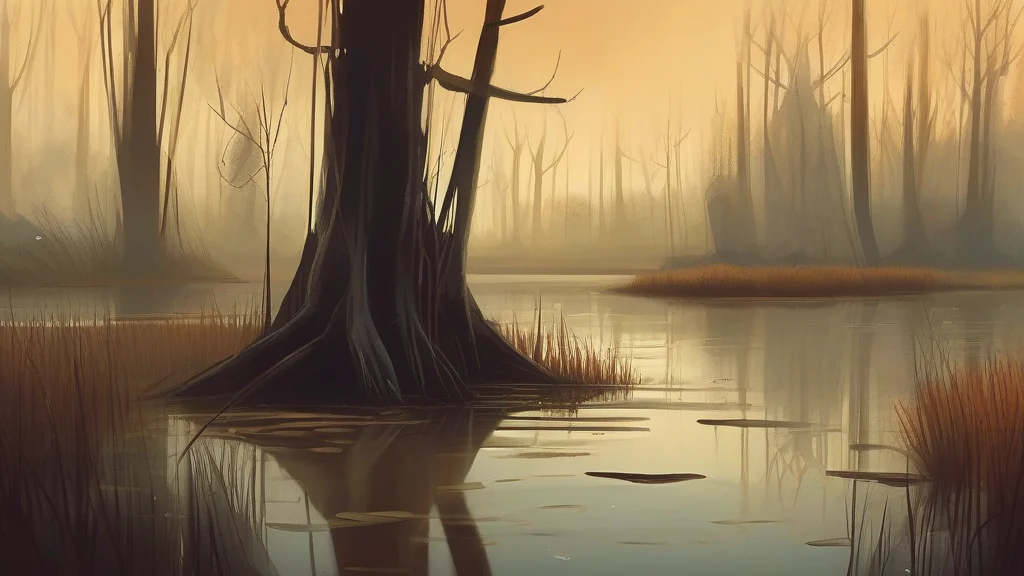
A swamp is a wetland where water regularly or permanently covers the land, usually creating muddy soil and dense vegetation such as reeds, grasses, and trees. The word can also describe a figurative situation in which a person or organization has been overwhelmed by work, problems, or demand. In this use, “swamped by requests” means receiving more requests than can be handled, while “swamped with work” means heavily burdened. Swamps are ecologically important because they store water, reduce flooding, filter pollutants, and provide habitat for many species. The term is used widely in British and American English, though nearby words such as marsh and bog may distinguish particular kinds of wetland according to their water depth, vegetation, and soil composition.
An area of low-lying land covered with shallow water and usually muddy soil, often supporting dense wetland vegetation.
"They followed a narrow trail through the swamp at dusk."
Swamp is broader than terms such as bog and marsh, though speakers may use these words with some overlap.
To overwhelm someone with work, problems, requests, or information, or to flood or submerge something.
"The holiday rush swamped the small customer-service team."
The figurative use is especially common in phrases such as swamped with work and swamped by demand.
The plural is used when referring to multiple wetlands or to the wetland environment in general.
"The wetlands protect several swamps from development."
Swamps are among nature's most effective filters: their plants and soils trap sediment, absorb excess water, and help limit the spread of floodwater.
Reviewed by Deb Chak, Editor. AI-assisted content curated by RJS Tech Solutions LLP.
Where does swamp come from?
The word comes from Middle English swamp or swampe, probably borrowed from Dutch zwamp, meaning marshy or muddy ground. It is related to German Sumpf, a word for swamp or bog, and to the wider Germanic vocabulary of wet, muddy places. Over time, swamp developed both its established noun meaning and figurative uses for being overwhelmed.
Related word forms
How swamp is actually used
In its noun sense, swamp is common in British, American, Australian, and other varieties of English. The verb is informal but widely accepted; it often appears in the expressions swamped with work and swamped by requests.
Easily confused with swamp
A marsh is generally wetter and more often covered by shallow water and grasses, whereas a swamp typically has muddy ground, dense vegetation, and standing water.
A bog is especially characterized by soft, saturated peat, while a swamp is a broader term for a waterlogged wetland.