
What does swan mean?
A swan is a large, elegant water bird, most often recognized by its long neck, broad wings, and graceful way of moving. In ordinary descriptions, it may refer to the familiar white swan, although swans can also be black or have grey plumage depending on the species. Swans are usually associated with calmness, dignity, beauty, and refinement, so the word is often used figuratively of a person who moves or behaves with unusual grace. The phrase “swan song” refers to a final performance or farewell, while “black swan” has become an established expression for an unexpected event with major consequences. Because swans are conspicuous and slow-moving, they have long been prominent in folklore, art, and symbolism, especially as images of elegance, purity, and transformation.
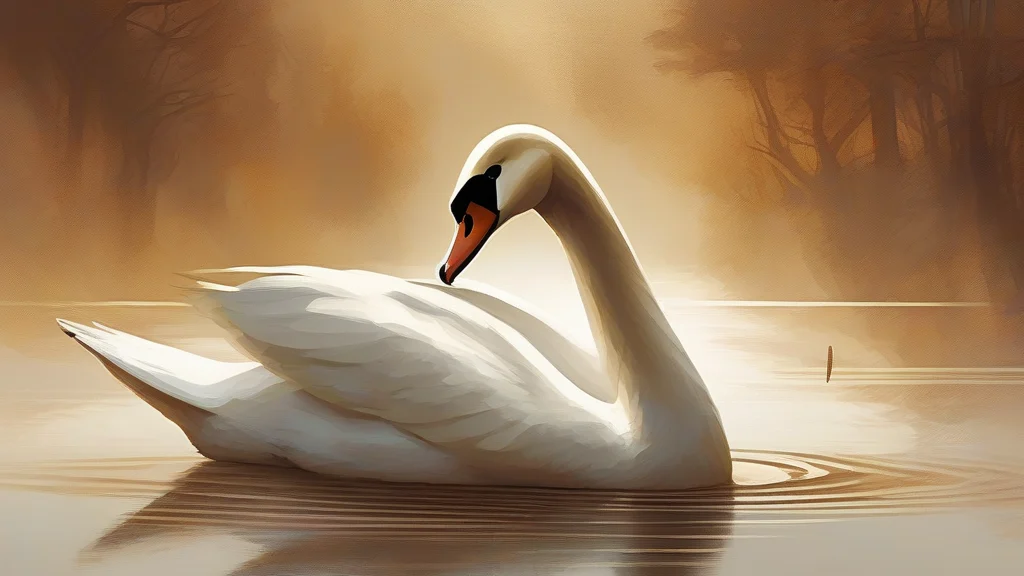
A large water bird with a long neck, broad wings, and typically white plumage.
"The swan rested on the lake while its young fed nearby."
The word is also used metaphorically for a person of exceptional grace or distinction.
To move or behave in a slow, graceful, impressive manner.
"She swanned into the room wearing a dramatic silver gown."
This use is informal and usually carries a slightly admiring or theatrical tone.
The standard plural of the noun is swans.
"Swans gathered near the island at the center of the lake."
The rare black swan became a symbol of the unexpected: the phrase “black swan event” refers to a surprise disruption that overturns familiar assumptions.
Reviewed by Deb Chak, Editor. AI-assisted content curated by RJS Tech Solutions LLP.
Where does swan come from?
The English word comes from Old English swān, used for the bird. It is generally traced to Proto-Germanic *swaną, although the deeper origin of that form is uncertain. Cognates include Dutch zwaan, German Schwan, and Swedish svan, reflecting the word's Germanic distribution across northern Europe.
Related word forms
How swan is actually used
The word is commonly used in poetic or metaphorical language for a person of exceptional grace or elegance. “Black swan” is also used figuratively for an unexpected event or condition, especially in finance and risk management.
Easily confused with swan
Swan refers to the bird or to a metaphorically graceful person, whereas swan's tongue is a plant name and is not another spelling of the bird.