
What does swanlike mean?
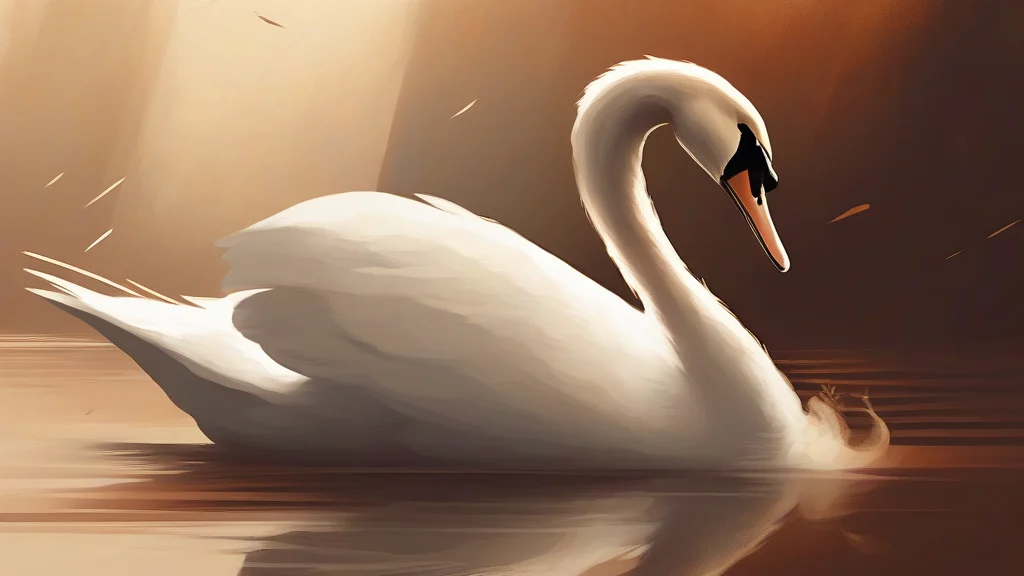
Swanlike means resembling a swan, particularly in the graceful movement, elegant bearing, or long-necked proportions associated with the bird. The word is commonly used for people whose posture or movements seem poised, controlled, and effortlessly elegant: a dancer may display swanlike grace, while someone entering a room might move with swanlike dignity. It is a relatively uncommon literary adjective rather than everyday standard vocabulary, so its use often adds a poetic or heightened tone. Its figurative force comes from the contrast between a swan's apparent ease and its impressive physical grace. The term is therefore especially effective in descriptive writing about movement, performance, posture, or dignified conduct. It can occasionally describe an object or form that resembles a swan's shape, but human grace is its dominant association.
adjectiveResembling a swan, especially in grace, elegant bearing, or graceful movement.
- Resembling a swan, especially in grace, bearing, shape, or movement.
"She crossed the stage with a swanlike poise that commanded the room."
"The dancer's swanlike posture made the difficult passage look effortless."
"He entered the quiet room with a swanlike calm and an air of authority."
Swanlike belongs to a vivid family of English compounds that use -like to turn an animal's familiar movements into a description of human elegance.
Reviewed by Deb Chak, Editor. AI-assisted content curated by RJS Tech Solutions LLP.
Where does swanlike come from?
Swanlike is an English compound formed from swan and the suffix -like, meaning “resembling.” The element swan comes from Old English swan and ultimately from Proto-Germanic *swanaz; related forms appear in languages such as Dutch zwaan and German Schwan. The compound's development followed the productive English pattern of adding -like to a noun to create an adjective with a figurative resemblance.
How swanlike is actually used
This is an uncommon, generally literary adjective. It evokes effortless elegance and graceful bearing more often than a literal resemblance to a swan.