
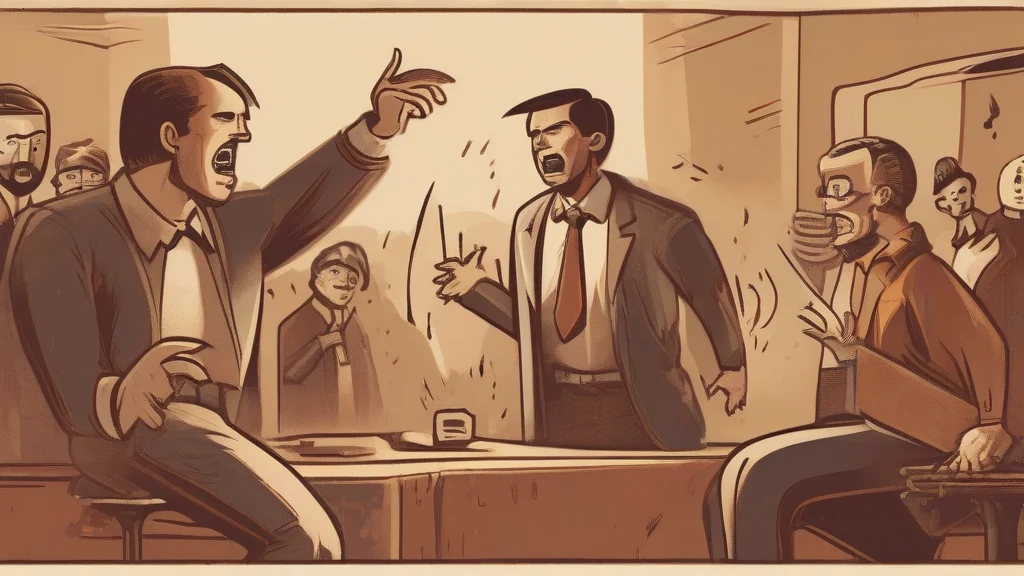
What does swearing mean?
Swearing has two broad and familiar uses. In its most common modern sense, it means using profane or offensive language, typically because someone is angry, frustrated, or emotionally overwhelmed. This use is relatively informal, although swearing has also been used for expressive effect in literature, comedy, and other artistic contexts. “Swear at someone” specifically means to direct abusive or profane words toward that person. In a more formal and historically older sense, swearing means making a solemn promise or taking an oath. Expressions such as “swearing an oath,” “swearing in,” and “sworn in” belong to legal, political, and ceremonial situations. The contrast between the two senses reflects the word’s long history: it originally concerned promises and declarations before moving, through the use of oaths, toward its modern association with profanity. Swearing is therefore useful not only for describing blunt or angry speech but also for the formal acts through which people assume office, confirm loyalty, or undertake a serious obligation.
verbTo use profane or offensive words, especially in anger or strong emotion. It can also mean to make a solemn promise or oath.
- To use profane or offensive words, especially in anger or strong emotion.
- To make a solemn promise or oath.
"He stopped swearing and tried to explain himself calmly."
"The player was cautioned for swearing at the referee."
"The new mayor was sworn in after swearing the oath of office."
From solemn promises made before witnesses to explosive outbursts in the locker room, swearing has carried both solemnity and fury.
Reviewed by Deb Chak, Editor. AI-assisted content curated by RJS Tech Solutions LLP.
Where does swearing come from?
The word descends from Old English swerian, meaning “to swear, affirm, or vow.” It developed through Proto-Germanic *swarjaną and ultimately from the Proto-Indo-European root *swer-, associated with speaking or asserting. The formal sense continued in legal and religious oaths, while the use of profanity developed later.
Related word forms
How swearing is actually used
The informal sense is common in everyday speech and is usually intransitive, especially in constructions such as “swear at someone.” The older formal sense appears in legal, religious, and ceremonial contexts, commonly as “swear an oath” or in the phrasal verb “swear in.”