
What does swine mean?
Swine is an old-fashioned word for a pig or for pigs collectively. It is also the standard plural form, so a group of swine is not grammatically irregular in the way that a group of sheep is. In neutral contexts, the word can sound formal, literary, or traditional, especially when referring to pigs kept for meat. Its figurative meanings are much more common in deliberately disparaging language: calling someone swine suggests greed, filth, coarseness, or a contemptible character. These figurative senses are now usually more frequent than the literal reference to farm animals, although they are also harsher than the milder word 'pig' in some contexts. In older writing, swine could refer to pigs as a type collectively, and the archaic verb 'to swine' meant to behave in a contemptible manner.
A domesticated pig, especially one raised for meat; also, pigs collectively.
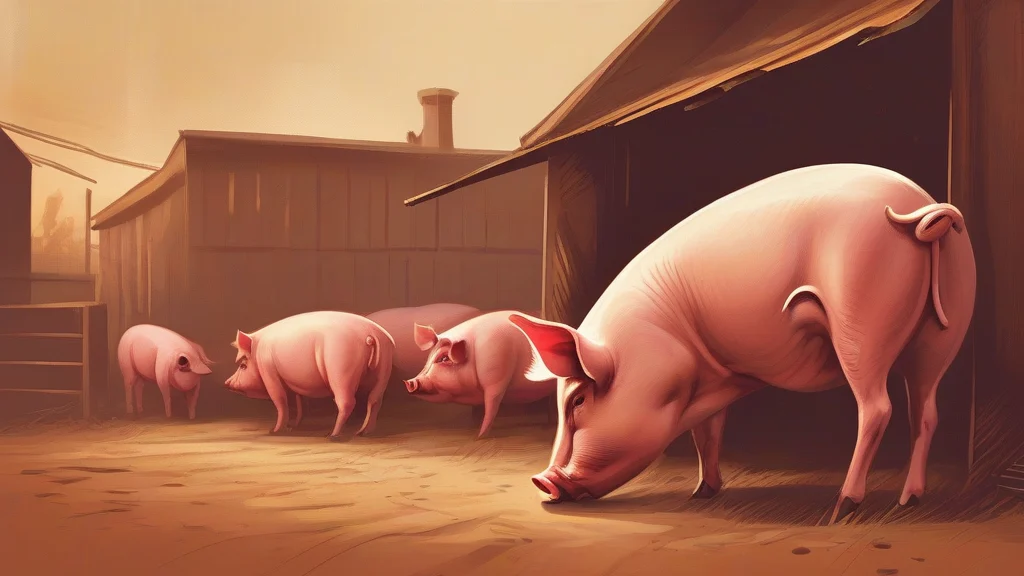
"The yard was occupied by several swine."
The word is formally both singular and plural, but its collective or plural sense is the most familiar. It can sound old-fashioned or literary in literal contexts and is strongly derogatory in figurative ones.
To behave in a contemptible or degrading manner.
"He would swine whenever another driver challenged him."
This verb is archaic and rare in modern English.
The standard plural is swine. The word can also be used in the singular to refer to one pig, though it is most often used collectively or as a plural.
"A dozen swine were led into the barn."
Swine can mean one pig, many pigs, or—when used figuratively—a whole group of unpleasant people.
Reviewed by Deb Chak, Editor. AI-assisted content curated by RJS Tech Solutions LLP.
Etymology of swine
Swine comes from Old English swīn, a Germanic word for a pig. The Old English term probably developed from a wider Germanic sense connected with what belonged to oneself or one's own group, though its precise historical development is not entirely certain. Related Germanic forms include German Schwein, Dutch zwijn, and Swedish svin, all meaning pig or swine.
Related word forms
How swine is actually used
As a noun, swine is formally both singular and plural, although its plural use is more common. The figurative sense is strongly derogatory. The verb 'to swine' is archaic and rare.
Easily confused with swine
As a noun, swine refers to a pig or pigs collectively, while a single animal is usually called a pig; swine is also the standard plural form.
Swine are farm animals kept for meat, whereas swans are large water birds.