
What does swineherd mean?
A swineherd is a person who tends pigs, looking after their feeding, safety, and movement between grazing areas, pens, or fields. The word belongs to the vocabulary of traditional agricultural life and is much less common today, when pig keeping is usually described using broader terms such as pig farming or pig husbandry. It nevertheless has a distinctive historical and literary quality, frequently appearing in accounts of village life and in stories set in the countryside. The compound is transparent: “swine” means pigs, while “herd” refers to a keeper of animals. Though modern listeners will readily understand the word, its use may suggest an old-fashioned occupation, a rural setting, or an intentionally traditional register. In those contexts, “swineherd” is more evocative and specific than the general term “farmer.”
nounA person whose occupation is to tend, feed, and care for pigs or swine.
- A person employed or engaged in tending and caring for pigs.
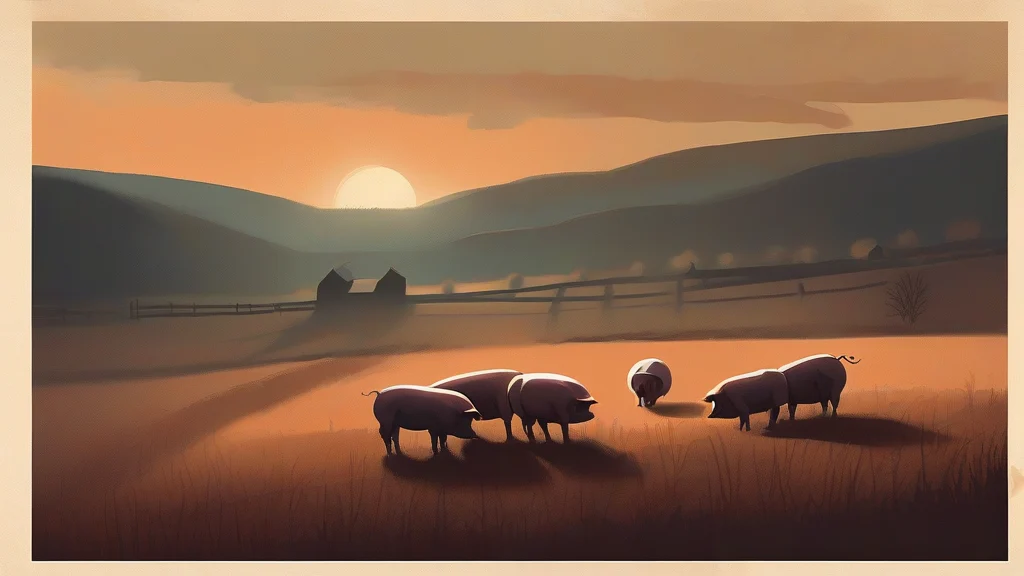
"The village swineherd led the animals back to their pen at dusk."
"A swineherd watched the pigs as they rooted through the field."
"The story follows a swineherd who discovers that one of his charges is unusual."
The regular plural is formed by adding -s.
"The swineherds guided their pigs into the shelter."
Swineherd preserves an older rural calling once found in villages where pigs were a familiar part of everyday life.
Reviewed by Deb Chak, Editor. AI-assisted content curated by RJS Tech Solutions LLP.
Where does swineherd come from?
“Swineherd” is an English compound formed from “swine” and “herd.” Both elements are old: “swine” descends from Old English swīn, meaning “pig,” while “herd” comes from Old English heord in the sense of a keeper of animals. The compound developed within English as a specific occupational designation and is parallel in structure to related terms for keepers of other livestock.
How swineherd is actually used
The word is now uncommon in ordinary modern usage, though it remains especially natural in historical, rural, and literary contexts.
Easily confused with swineherd
A swineherd tends pigs, whereas a shepherd tends sheep.