
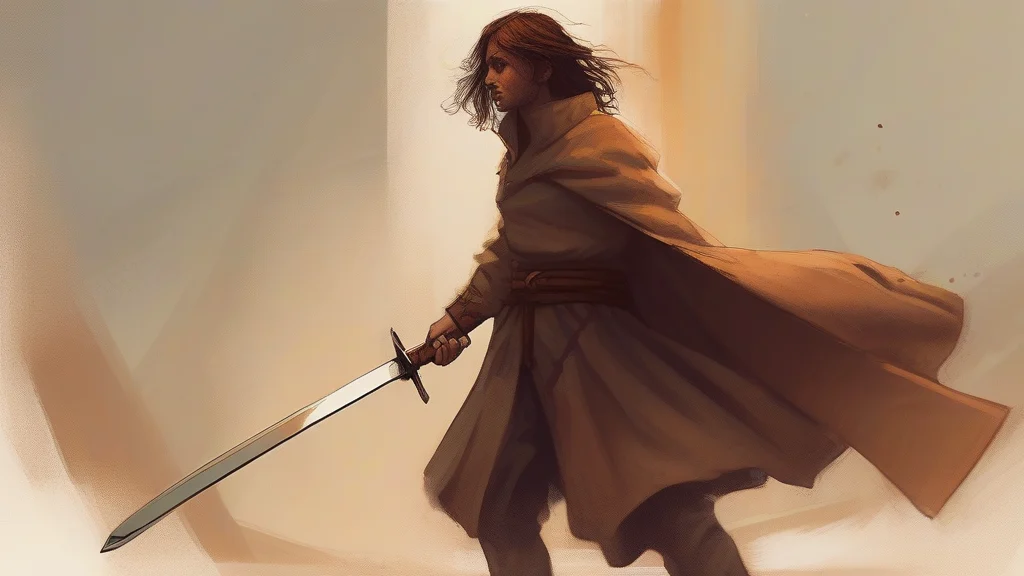
What does swordless mean?
Swordless means having or carrying no sword. The word most often describes a person who has been disarmed, or one who fights without a blade, and it can also describe a form of combat conducted without swords. Its literal meaning is precise, but figurative uses may imply that someone has been stripped of a customary source of authority, protection, or power. In modern everyday speech, unarmed may be more common, although that word is broader because a person without a sword may still possess another weapon. Swordless also occurs readily in historical and fantasy settings, where the contrast between armed and unarmed combatants can be important to the narrative. The adjective is transparent in formation: it combines the noun sword with the suffix -less, meaning without or lacking. The resulting word is useful when the absence of a sword is specifically relevant rather than the absence of weapons generally.
adjectiveHaving no sword; carrying, wielding, or being equipped without a sword.
- Having, carrying, or wielding no sword.
"The swordless diplomat entered the chamber with a calm but guarded expression."
"A swordless fighter can still prevail through agility, strategy, or allies."
"The manuscript described a swordless age in which authority rested on law rather than warfare."
Swordless and wordless rhyme, but one describes a warrior without a blade and the other a speaker without words.
Reviewed by Deb Chak, Editor. AI-assisted content curated by RJS Tech Solutions LLP.
Where does swordless come from?
Swordless is an English compound formed from the noun sword and the suffix -less, meaning without or lacking. The base word sword descends through Middle English from Old English sweord, a Germanic word with relatives including German Schwert and Dutch zwaard. Swordless was formed within English to specify the absence of that particular weapon rather than weapons in general.
How swordless is actually used
The word is relatively uncommon in contemporary everyday English and is most natural in literary, historical, or fantastical contexts. In figurative use, it can suggest being deprived of customary power or protection. It is more specific than unarmed, which generally means having no weapon at all.
Easily confused with swordless
Swordless means having no sword, whereas wordless means having no words.