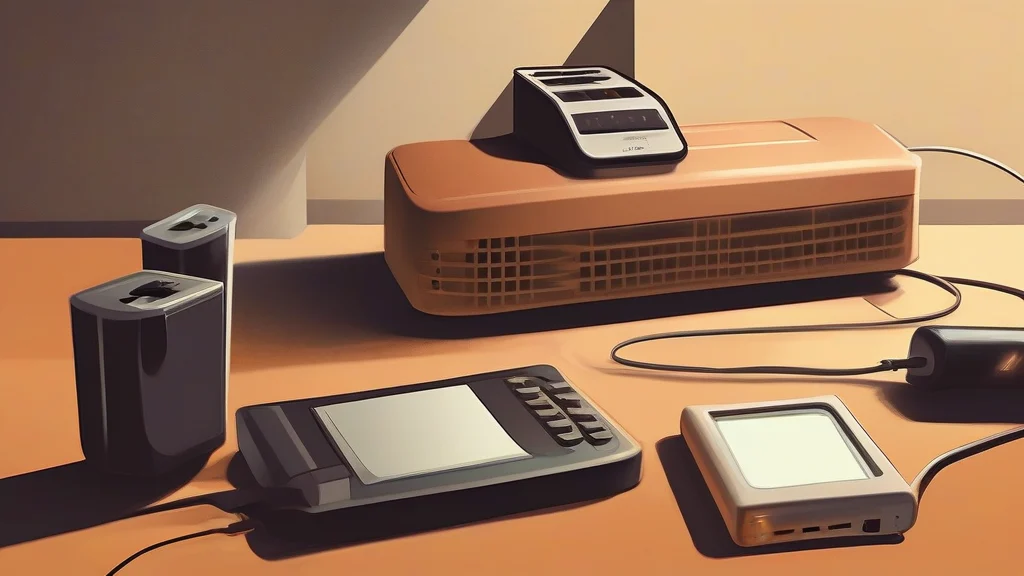
What does cordless mean?
Cordless is an adjective describing devices that operate without a physical cable connecting them to a power supply, drawing energy instead from an internal rechargeable battery. Formed from "cord" plus the suffix "-less," it entered everyday language in the mid-twentieth century as battery technology made portable appliances practical. The word is overwhelmingly used attributively, appearing in familiar pairings such as cordless drill, cordless phone, cordless vacuum, and cordless keyboard. Its connotations are practical and modern: freedom of movement, convenience, and portability, sometimes at the acknowledged cost of limited battery life. Although often used interchangeably with "wireless" in casual speech, the two terms differ subtly — wireless generally describes data or signal transmission without cables, while cordless emphasizes independence from a power cord. The word is standard in both British and American English and remains a fixture of consumer technology vocabulary.
adjective(Of a device or tool) operating without a cord or cable connecting it to a power source, typically powered by a rechargeable battery.
- (Of a device) powered by an internal rechargeable battery rather than a cable plugged into mains electricity.
- (Of a telephone handset) communicating with its base station by radio rather than a connecting wire.
"She bought a cordless drill to hang the shelves without hunting for an outlet."
"A cordless vacuum makes quick work of crumbs under the dining table."
"He answered the cordless phone out on the patio, far from its charging base."
The word "cordless" barely existed before the 1970s — then the cordless phone arrived and untethered the world one battery at a time.
Reviewed by Deb Chak, Editor. AI-assisted content curated by RJS Tech Solutions LLP.
Etymology of cordless
Cordless is formed transparently within English from the noun "cord" — ultimately from Latin "chorda" ("string, gut"), borrowed via Greek "khorde" — combined with the suffix "-less," meaning "without." The compound arose in the twentieth century as electrical appliances became widespread, gaining prominence in the 1970s and 1980s with the arrival of cordless telephones and power tools. It shares its root with words such as "chord," "accord," and "concord."
How cordless is actually used
Cordless is almost exclusively attributive — it appears before nouns (a cordless mouse) and rarely stands alone as a predicate. It carries neutral, practical connotations and is common in consumer-product language. In British English it is especially associated with kettles and phones; in American English with power tools.
Easily confused with cordless
"Wireless" typically refers to communication without cables (radio, Wi-Fi), while "cordless" usually describes portable devices that would otherwise be tethered by a power cord.