
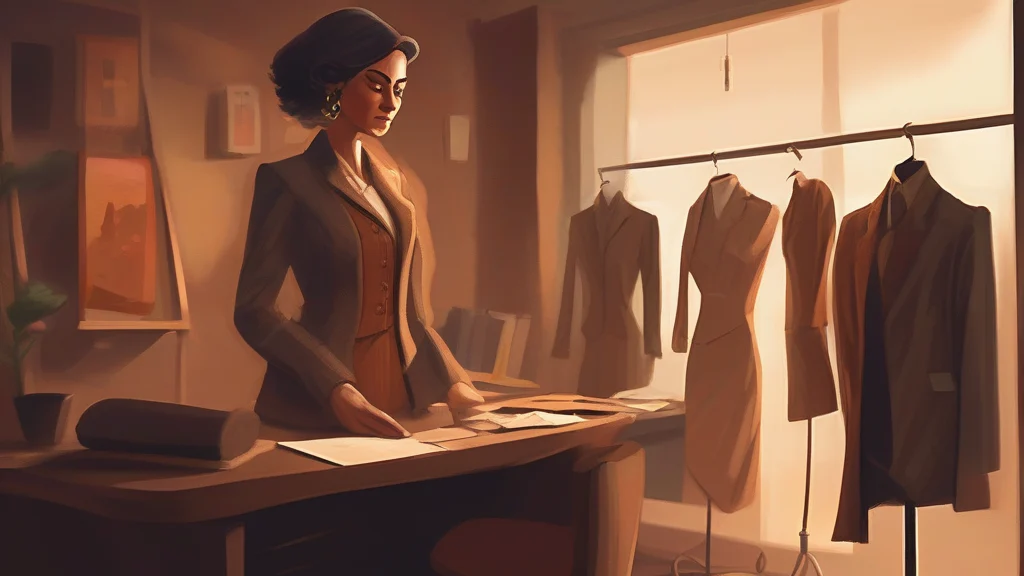
What does tailoress mean?
A tailoress is a woman who makes and alters clothing, especially as an occupation or historical role. In modern usage the word sounds dated, appearing often in biographies, historical fiction, or accounts of women’s work. It comes from the older word “tailor” with the feminine suffix “-ess,” a combination that explicitly identifies the worker as female. This reflects a broader convention in English by which many traditional occupations once had distinct masculine and feminine forms, such as “actor” and “actress.” Today, “tailor” can refer to a person of any gender, while “tailoress” is retained chiefly to describe women in earlier periods or to evoke a historical setting. In such contexts it may suggest careful handiwork, dressmaking, or the economic independence of a skilled craftswoman.
nounA woman who makes and alters clothing. The term is now dated and is chiefly found in historical or literary contexts.
- A woman employed to make and alter clothing.
"The village tailoress altered the wedding dress before the ceremony."
"She became a skilled tailoress and made clothes for the local market."
"The novel portrays the young tailoress navigating life in a provincial town."
The regular plural is “tailoresses.” The word itself is now dated.
"Several tailoresses advertised their services in the newspaper."
The revealing suffix “-ess” recalls an era when many occupations were routinely marked as male or female in their names.
Reviewed by Deb Chak, Editor. AI-assisted content curated by RJS Tech Solutions LLP.
Where does tailoress come from?
“Tailoress” is formed from “tailor” and the feminine suffix “-ess.” The suffix came into English through Old French and Latin forms used to mark feminine nouns and agent names, and it became especially productive in medieval and early modern English for women’s occupations. The compound became common when occupational titles commonly distinguished workers by gender.
Related word forms
How tailoress is actually used
The word is dated and occurs mainly in historical, biographical, or literary language. “Seamstress” and “dressmaker” are more usual modern terms, although neither is an exact equivalent in every context.
Easily confused with tailoress
A tailor is a person who makes or alters clothing, while a tailoress specifically denotes a woman doing that work.