
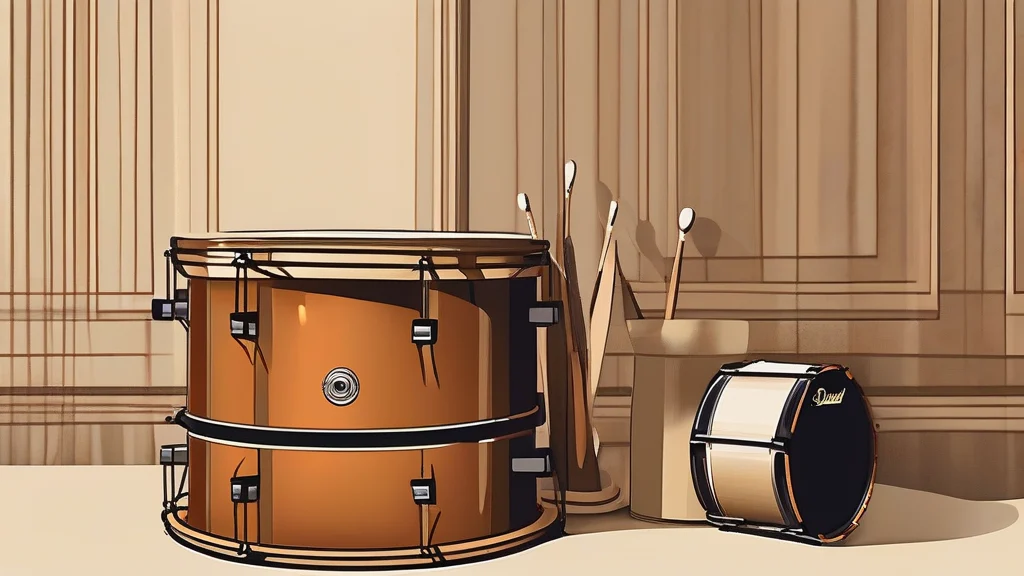
What does tambour mean?
A tambour is a small drum, especially one played with one hand while the other hand strikes it. The word can also refer to a circular embroidery frame over which fabric is stretched so that a design can be worked in thread. In modern English, both meanings are uncommon, and the term is most likely to appear in descriptions of historical music, textiles, heraldry, or traditional crafts. Its musical sense emphasizes the physical instrument rather than the broader category of percussion, while its textile sense is associated with fine embroidery and the controlled tension of the work surface. The word is chiefly British today and has a formal or literary tone. Related forms include tambourine, a jingled frame drum, and tabor, another small drum associated with historical folk music. Although tambour is not widely used in everyday speech, it is useful when distinguishing a particular kind of drum or a specific embroidery frame from more general objects.
As a noun, tambour means a small drum, especially one played with one hand and struck with the other; it can also mean a circular frame used for embroidery.
"The ceremonial guard answered with the steady rhythm of the tambour."
The musical sense is chiefly British and literary in modern English; the embroidery sense is specialized.
As a verb, tambour means to play or beat a tambour, or to produce a rhythmic sound by drumming.
"The musicians tamboured a lively rhythm as the procession entered."
This verb is uncommon and is mainly used in literary, historical, or ceremonial contexts.
The regular plural is tambours; the singular form is generally unchanged in contexts where the final r is not pronounced before a pause.
"Two tambours were placed beside the embroidered banners."
One word can point to both a drum and the circular frame used to embroider: the frame echoes the drum’s shape.
Reviewed by Deb Chak, Editor. AI-assisted content curated by RJS Tech Solutions LLP.
Where does tambour come from?
The English word was borrowed from French tambour, meaning a drum, which developed from Provençal tamborin. Its ultimate source is generally traced through Arabic ṭanbūr to Persian tanbur, an ancient stringed instrument. English later developed the separate meaning of an embroidery frame by analogy with the circular shape of a drum, and related forms such as tambourine and tabor belong to the same broad word family.
Related word forms
How tambour is actually used
The noun is chiefly British and literary or historical in modern use. As a verb, it is uncommon and belongs mainly to formal, literary, or historical contexts.
Easily confused with tambour
A tambourine is a small frame drum with metal jingles around its rim, whereas a tambour is a drum more generally and can also denote an embroidery frame.