
What does tabor mean?
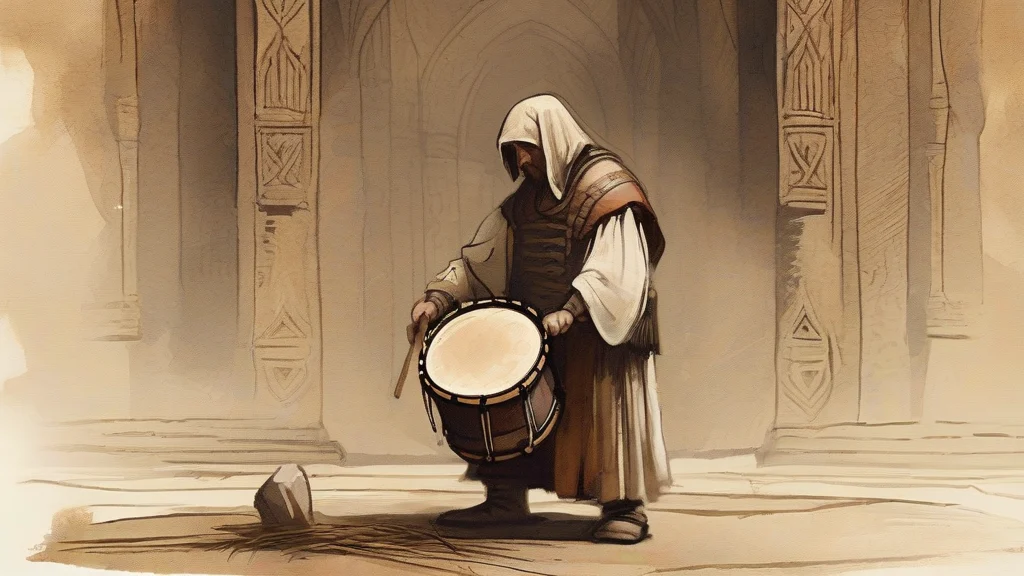
A tabor is a small drum, especially the compact cylindrical drum associated with traditional European piping and dancing. Historically, a musician could beat the tabor with one hand while playing a pipe with the other, allowing one performer to supply rhythm and melody at the same time. In modern English the word is uncommon and tends to appear in historical, literary, or specialist musical contexts, where it conveys antiquity and a vivid sense of folk performance rather than belonging to the vocabulary of contemporary drum kits. It is more specific than the general word drum and should not be used merely as an elegant substitute for it: a tabor is a particular, portable drum associated with accompaniment. Mention of the instrument can nevertheless be vivid and memorable, recalling processions, dances, and the old partnership between pipe and tabor. Recognizing it adds historical texture to writing about music and performance while remaining accurate about the instrument's actual function.
nounA small drum, especially a compact drum played with one hand while the other is occupied, as when accompanying a pipe player or dancer.
- A small drum, particularly one used to accompany a pipe, dancer, or other performer.
"The minstrel beat the tabor with one hand while playing his pipe with the other."
"The procession began with a piper and a drummer playing the tabor."
"The poem describes villagers dancing to the sound of the tabor."
The standard plural is tabors; modern prose generally uses the singular form.
"Several small tabor drums were displayed at the festival."
Long before drum kits, one musician could carry both the beat and the melody: beat the tabor with one hand while piping with the other.
Reviewed by Deb Chak, Editor. AI-assisted content curated by RJS Tech Solutions LLP.
Where does tabor come from?
The word entered Middle English through Anglo-French and Old French tabour. The Old French term was borrowed ultimately from Arabic ṭabūr, meaning a drum, an onomatopoeic word. Related forms represented in French tambour, English tambourine, and Spanish tambor reflect the same Arabic root.
Related word forms
How tabor is actually used
Now mainly historical, literary, or specialist musical, the word often suggests an old folk instrument and may be used attributively before a noun such as drum or pipe.
Easily confused with tabor
Tabour is chiefly an archaic or alternate spelling of the same small drum, whereas tabor is the usual modern English spelling.