
What does timbrel mean?
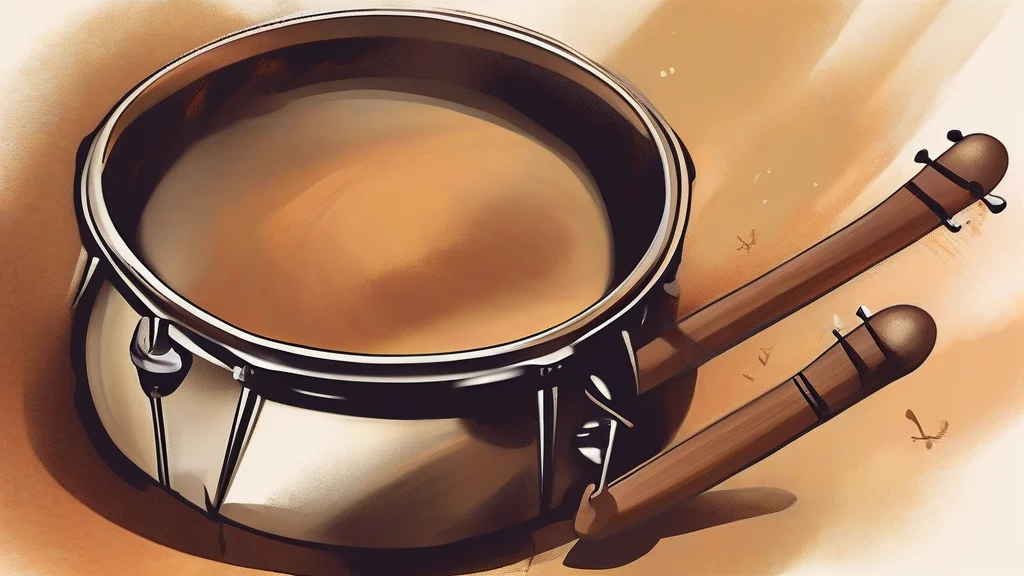
Timbrel names a small, shallow drum with a single covered head. Unlike the larger, jingled tambourine, it has no metal discs set into its frame, and it was historically played with either the hand or a small stick. The word survives mainly in literature, historical writing, and discussions of early music, where it can evoke minstrels, dancers, processions, and medieval or Renaissance performances. Although a timbrel is broadly a type of drum, the specific word is useful when the instrument's modest size, shallow body, and historical character need to be emphasized. Its name also connects it with a wider family of European musical terms derived from Greek roots associated with drums, including tympanum and timpani. The related name tambourine passed into English through French from the same broad etymological tradition.
nounA small, shallow, single-headed drum, historically played with the hand or a stick.
- A small, shallow, single-headed drum, historically used in popular and ceremonial music.
"A travelling musician played the timbrel outside the castle while the procession gathered."
"The minstrel kept time on the timbrel as the dancers circled the square."
"Museum musicians use a reconstructed timbrel to demonstrate early dance music."
The standard plural of timbrel.
"Two timbrels accompanied the procession through the village."
A timbrel is a drum without jingles: its defining detail is what it leaves out.
Reviewed by Deb Chak, Editor. AI-assisted content curated by RJS Tech Solutions LLP.
Where does timbrel come from?
The word entered English during the late Middle English period from Old French timbrel, a term for a small drum. The French word came from Medieval Latin timbrelum, probably derived from Greek τυμπάνον (tympanon), meaning "drum." This Greek root is also represented in English words such as tympanum and timpani, while related French forms ultimately produced the name tambourine.
Related word forms
How timbrel is actually used
The word is uncommon in everyday modern English and is chiefly literary, historical, or specialist. It often evokes medieval or Renaissance music and may suggest a rustic or ceremonial instrument.
Easily confused with timbrel
A timbrel is a shallow single-headed drum without metal jingles, whereas a tambourine is a frame drum usually fitted with jingles.