
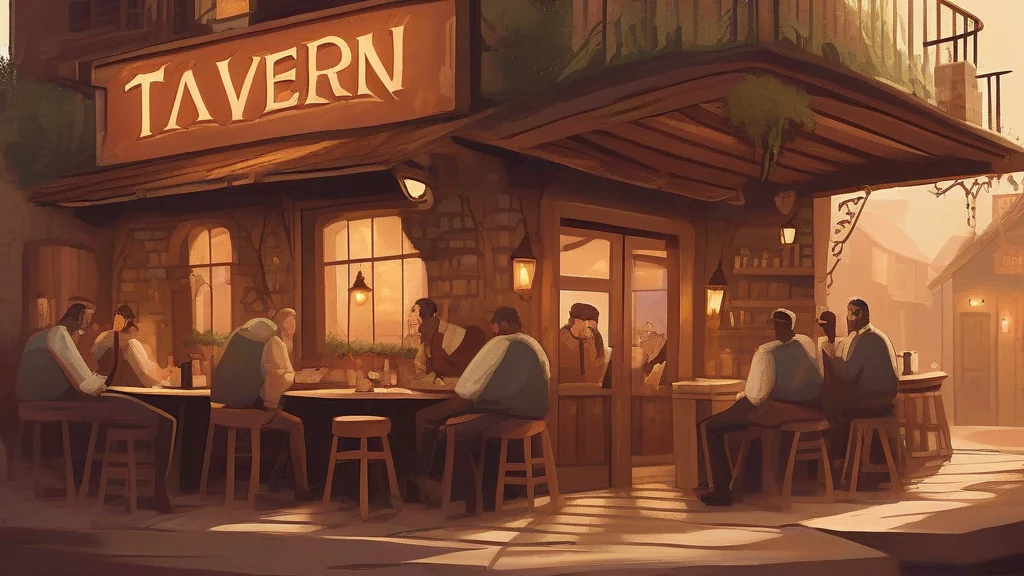
What does tavern mean?
A tavern is a place where alcoholic drinks are served, especially a traditional pub-style establishment; in earlier English, the term also denoted an inn that offered food, drink, and sometimes lodging. Today it often carries a traditional, rustic, or old-fashioned atmosphere, though the word does not require that atmosphere and is used for establishments of many styles. “The tavern” can evoke a communal meeting place where regulars gather, making the word useful when a setting should suggest hospitality, sociability, and a slightly historical tone. In older writing, taverns were central to travel and local life, providing both practical lodging and a place to drink, talk, hear news, and conduct business. Because the noun is largely formal or literary compared with the everyday “pub” or “bar,” writers often choose it for flavour rather than neutral description. Historically, signs helped taverns advertise their names and offerings to customers, making the tavern an especially memorable feature of the old English high street.
An establishment that serves alcoholic drinks, especially one styled as a traditional pub or inn; historically, an inn offering food, drink, and sometimes lodging.
"They spent the evening in a crowded tavern near the harbour."
The word is somewhat literary or old-fashioned in modern usage and often implies a traditional or rustic atmosphere.
To frequent or visit a tavern.
"The company taverned late into the night."
Archaic and uncommon; now found chiefly in historical or literary writing.
The standard plural of the noun.
"The village had three taverns along its main street."
Tavern signs once acted as visual advertisements, helping patrons recognize an inn and the kind of drink or service it offered.
Reviewed by Deb Chak, Editor. AI-assisted content curated by RJS Tech Solutions LLP.
Where does tavern come from?
The word entered Middle English from Old French tavern(e), meaning an inn or drinking place, which continued Medieval Latin taberna. Latin taberna denoted a hut, booth, or shop and was borrowed in several European languages for establishments serving food or drink. English developed the familiar sense of a drinking establishment, while related forms such as taverner and taverning reflect its long association with innkeeping and social drinking. The English word tabernacle comes through Latin tabernaculum, a diminutive of taberna, although its modern senses are largely unrelated to drinking houses.
Related word forms
How tavern is actually used
In modern British English, “pub” is more common, while in American English “bar” is more common. “Tavern” often suggests a traditional, rustic, old-fashioned, or themed establishment, but it can also be used neutrally. The verb is archaic and now occurs mainly in older literature.
Easily confused with tavern
A taverner is a person who keeps or serves at a tavern, whereas a tavern is the establishment itself.