
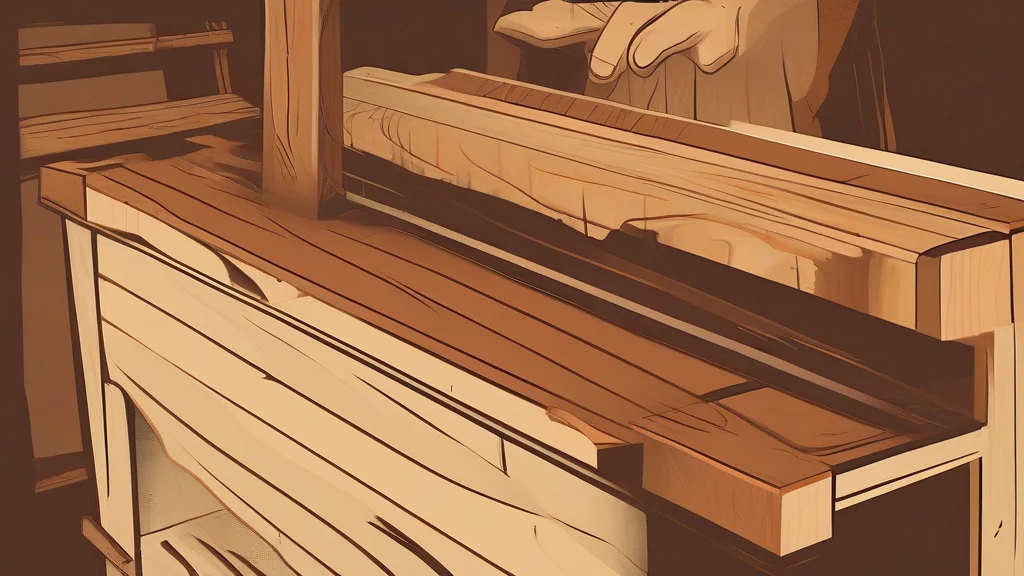
What does tenoning mean?
Tenoning is the woodworking operation of cutting a projecting rectangular member, known as a tenon, so that it fits securely into a corresponding recess, or mortise. The word is used chiefly as a technical term for the process, as in “careful tenoning prevents a loose joint,” and as the gerund of the verb “to tenon,” as in “the carpenter tenoned the rail.” It belongs to the vocabulary of joinery, cabinetmaking, and furniture construction rather than general conversation. Tenoning differs from mortising: the former creates the projecting member, while the latter cuts the cavity that receives it. Although the form is uncommon outside woodworking, it is useful in describing a precise stage in traditional and modern joinery. The term also appears in the names of tools and equipment, such as a tenon saw, used to shape the shoulders and end of a tenon.
The operation or process of cutting a projecting member, or tenon, for fitting into a mortise.
"The workshop specializes in precise tenoning and joinery."
Usually treated as an uncountable process noun; plural usage is uncommon.
To form or cut a tenon on a piece of wood or another material.
"He tenoned the ends of the posts before joining them."
Commonly encountered as the gerund or present participle “tenoning”; the base verb “tenon” is more usual in descriptions of the operation.
Rare; the noun is usually uncountable.
"The samples displayed several examples of the carpenter's tenonings."
A tenon is the “tongue” of a wooden joint, and tenoning is how a carpenter shapes it to fit snugly into a mortise.
Reviewed by Deb Chak, Editor. AI-assisted content curated by RJS Tech Solutions LLP.
Where does tenoning come from?
Tenoning derives from the noun “tenon,” which came into English through French and ultimately relates to the Latin verb tenere, meaning “to hold.” The woodworking sense names a projecting piece meant to be held or seated within a corresponding recess. Related English words include “tenant,” “tenure,” and “tenacious,” all associated with the Latin root of holding.
Related word forms
How tenoning is actually used
This is primarily a technical woodworking term, used in joinery, cabinetmaking, and furniture construction. It is uncommon in general conversation, and the related verb “tenon” is often more natural when naming the operation directly.
Easily confused with tenoning
Tenoning cuts the projecting member of a joint, whereas mortising cuts the recessed cavity into which it fits.