
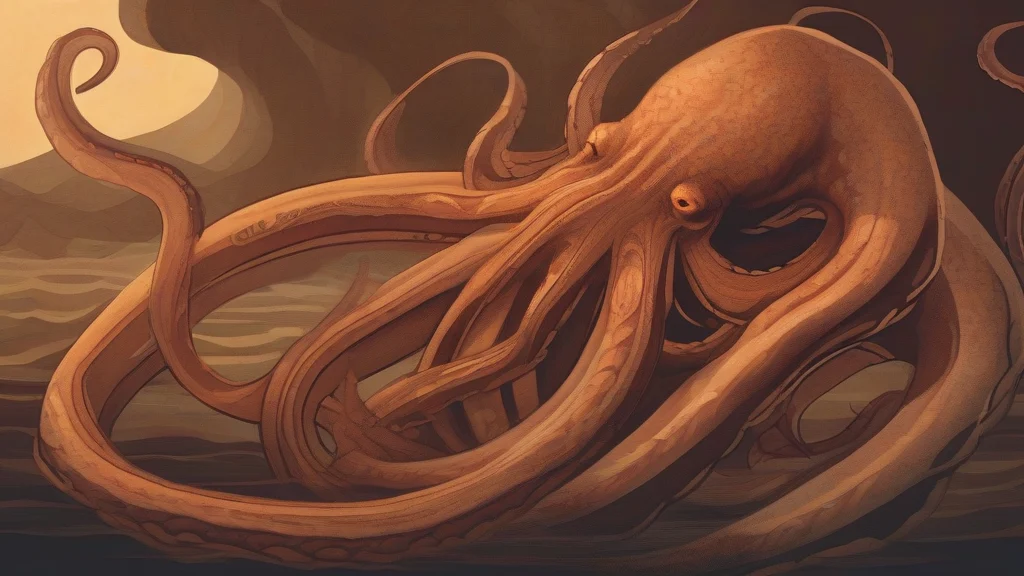
What does tentaculate mean?
Tentaculate is a rare word associated with the formation and possession of tentacles. As an intransitive verb, it describes an organism or structure developing tentacles, as when a young polyp begins to produce its delicate projections. As an adjective, tentaculate means having tentacles or tentacle-like features. The term is chiefly encountered in specialized biological writing, although its directness gives it a memorable quality in literary or descriptive prose. Its usefulness lies in naming an action that ordinary expressions such as “develop tentacles” describe only indirectly. Tentaculate ultimately shares its vocabulary with tentacle and tentacular: all trace to the Latin word tentaculum, meaning a small stretching or tendril-like projection. Because the word is uncommon, readers may initially interpret it as more elaborate than necessary, but in a technical description it can economically distinguish the process of developing tentacles from merely possessing them. The same word's verb and adjective forms make it especially adaptable for concise biological writing.
To form or develop tentacles.
"The organism began to tentaculate shortly after attaching to the rock."
Usually intransitive and used chiefly in biological or technical writing.
Having tentacles or tentacle-like projections.
"A tentaculate colony slowly expanded across the underwater surface."
Rare and more characteristic of technical or dated prose.
Some creatures do not merely possess tentacles; according to this word, they tentaculate.
Reviewed by Deb Chak, Editor. AI-assisted content curated by RJS Tech Solutions LLP.
Where does tentaculate come from?
Tentaculate derives from the Latin stem tentacul-, found in tentaculum, “little tendril” or “tentacle,” a diminutive of tendere, “to stretch.” English -ate was added to this stem to form the verb, with an adjectival use also recorded. Related English words include tentacle and tentacular, while tend belongs to the same wider Latin family.
Related word forms
How tentaculate is actually used
This is a rare scientific or literary word. The verb is typically used intransitively, while the adjective may sound especially archaic or technical.
Easily confused with tentaculate
Tentaculate can be a verb describing the formation of tentacles, or a rare adjective meaning tentacle-bearing, whereas tentacular is normally an adjective meaning having or resembling tentacles.