
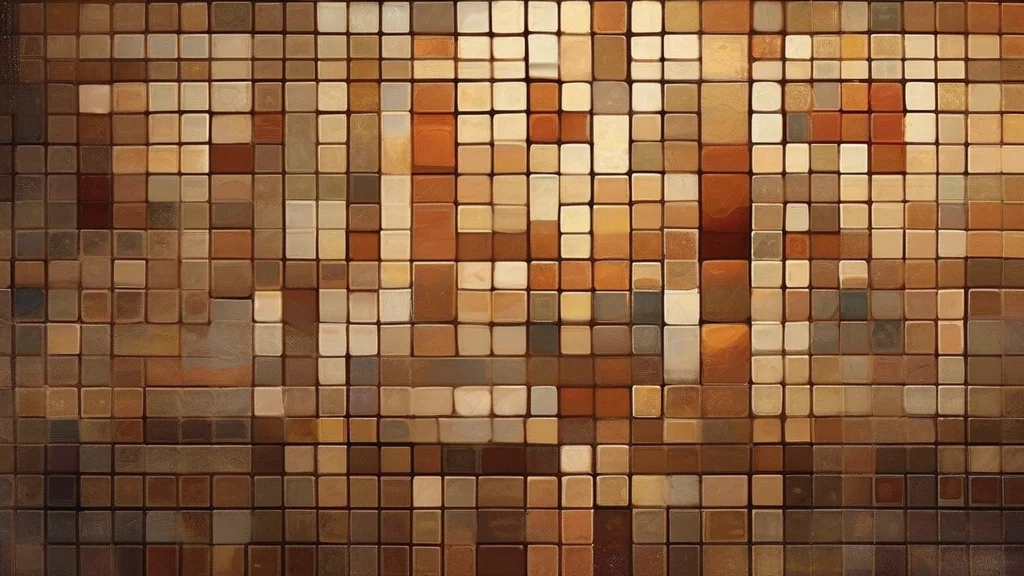
What does tesserae mean?
Tesserae is the plural of tessera and most commonly refers to the small pieces of glass, stone, ceramic, or other material used in mosaics. Each tessera may be cut and fitted by hand, allowing an artist to create detailed pictures, patterns, and landscapes from many differently colored components. The word also has historical senses: tesserae could be tokens, counters, or dice used in ancient societies. In modern English, “tesserae” is especially associated with mosaic art, archaeological finds, and descriptions of decorative surfaces, while the singular “tessera” is used for one individual piece. The word is useful because it names both a familiar artistic material and a specific category of ancient object, while also giving writers a precise alternative to the broader words “tiles” or “tokens.”
noun (plural)Tesserae are the small, usually square pieces of glass, stone, ceramic, or similar material used to make a mosaic. In historical contexts, the plural can also refer to ancient tokens, counters, or dice.
- Small pieces of glass, stone, ceramic, or similar material set into a mosaic.
- Ancient tokens or counters, especially square or rectangular pieces used for identification, administration, gaming, or religious purposes.
- Small ancient pieces of bone, ivory, wood, or similar material used as dice or counters.
"The mosaic was painstakingly assembled from thousands of colored tesserae."
"The artist cut the tesserae by hand before fitting them into the geometric design."
"Archaeologists discovered a collection of inscribed tesserae that had once functioned as administrative tokens."
The Latin-style plural ending -ae is standard in English; tesseras is also an accepted alternative plural.
"Tiny gold tesserae cover the surface of the medieval ceiling."
Tesserae once served as ancient counters and dice, but they are best known today as the tiny building blocks of mosaics.
Reviewed by Deb Chak, Editor. AI-assisted content curated by RJS Tech Solutions LLP.
Where does tesserae come from?
The word comes from Latin tessera, meaning a small square tile or token. Latin tessera was related to Greek tessera, a word for a four-sided tile, and ultimately to Greek tessares, meaning “four.” In English, the word developed into a term for mosaic pieces, while the plural form tesserae was also used for ancient tokens and counters.
Related word forms
How tesserae is actually used
In contemporary usage, the word is most common in art, architecture, and archaeology. Its historical meanings are learned or specialist rather than everyday.
Easily confused with tesserae
A tessera is one individual tile, token, or counter; tesserae is the plural form of the word.