
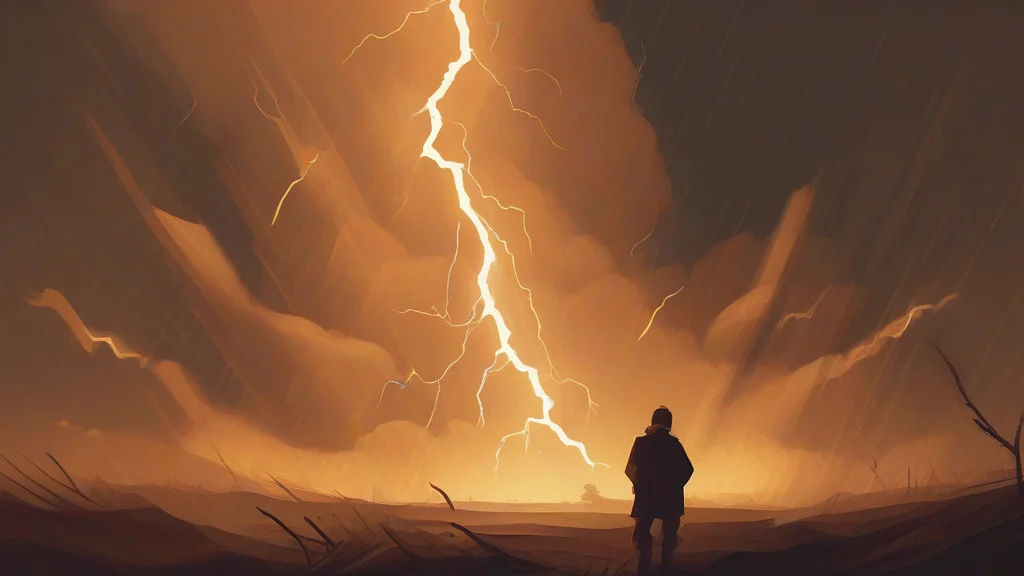
What does thunderclap mean?
A thunderclap is a sudden, sharp, loud report of thunder or a sound compared to one. In its literal sense, it describes the cracking or roaring that may accompany a lightning strike or a close storm. Figuratively, it can characterize any abrupt, powerful noise, such as a bang, crash, or roar that fills a space or commands attention. The word has a dramatic, slightly old-fashioned tone and is more evocative than the plainer terms thunder and bang. Its power comes from combining the force of natural weather with the idea of a single, startling moment: a thunderclap is not merely a prolonged rumble but an immediate burst of sound. This makes it especially useful in literary description, reporting, and vivid comparisons involving storms, collisions, impacts, or other sudden events.
nounA sudden, sharp, loud report of thunder, or a comparable sound described as resembling thunder. Figuratively, it refers to an abrupt, dramatic noise.
- A sudden, sharp, loud report of thunder.
- A sudden, loud sound likened to a report of thunder.
"A thunderclap shook the windows as the storm moved across the valley."
"The thunderclap echoed across the courtyard, making everyone beneath the windows startle."
"The performer struck the drum with such force that the audience felt a thunderclap of sound."
The regular plural is used when referring to multiple separate reports of thunder or comparable sounds.
"Several thunderclaps shook the old wooden windows."
A thunderclap is the dramatic punctuation mark of a storm: the moment that turns distant thunder into a sudden, attention-grabbing roar.
Reviewed by Deb Chak, Editor. AI-assisted content curated by RJS Tech Solutions LLP.
Etymology of thunderclap
Thunderclap is an English compound formed from thunder and clap, both inherited English words. The compound became established during the early modern period as a forceful description of a sudden report of thunder. Its components were also productive in related formations such as thunderstorm, thunderbolt, and thunderous.
Related word forms
How thunderclap is actually used
Chiefly literary and evocative. The literal sense is relatively uncommon outside descriptions of weather, while figurative uses emphasize suddenness, force, and drama.