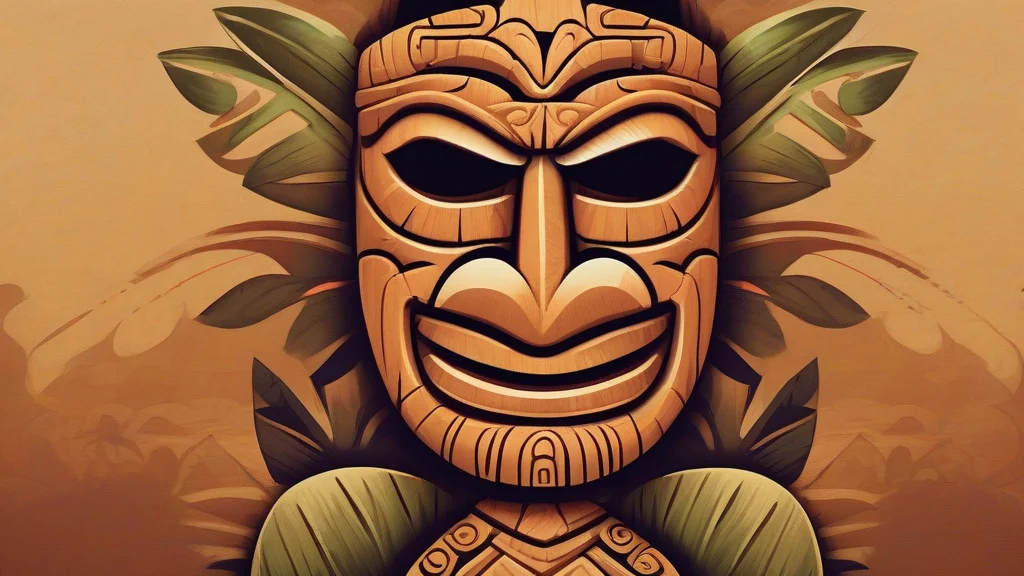
What does tiki mean?
The term 'tiki' refers to a carved figure or symbol in Polynesian cultures, often representing a god or spirit. It has also come to describe a style of decor or aesthetic inspired by Polynesian art, characterized by colorful masks, tropical patterns, and exotic motifs. This style, popularized in the mid-20th century, is often associated with retro kitsch and tropical nostalgia. Despite its potential for cultural appropriation, the tiki remains a fascinating and complex symbol of Pacific Island cultures, reflecting both traditional significance and modern reinterpretation.
A carved figure or symbol in Polynesian cultures
"The tiki mask was a sacred object in the village."
A style of decor or aesthetic inspired by Polynesian art
"The tiki bar was a popular spot for cocktails and dancing."
This sense is often associated with retro kitsch and tropical nostalgia.
The plural form 'tikis' is used to refer to multiple carved figures or symbols, or to describe a collection of tiki-inspired decor.
"The museum exhibit featured a collection of tikis from various Pacific Island cultures."
Reviewed by Deb Chak, Editor. AI-assisted content curated by RJS Tech Solutions LLP.
Etymology of tiki
The word 'tiki' originates from the Polynesian languages, specifically from the Maori language of New Zealand and the Hawaiian language. It refers to a carved figure or symbol, often representing a god or spirit in these cultures. The term has since been adopted into various languages, including English, and has evolved to encompass a broader cultural and aesthetic phenomenon.
How tiki is actually used
The term 'tiki' can have different connotations depending on the context, ranging from cultural significance to kitschy tourist decor.