
What does timpano mean?
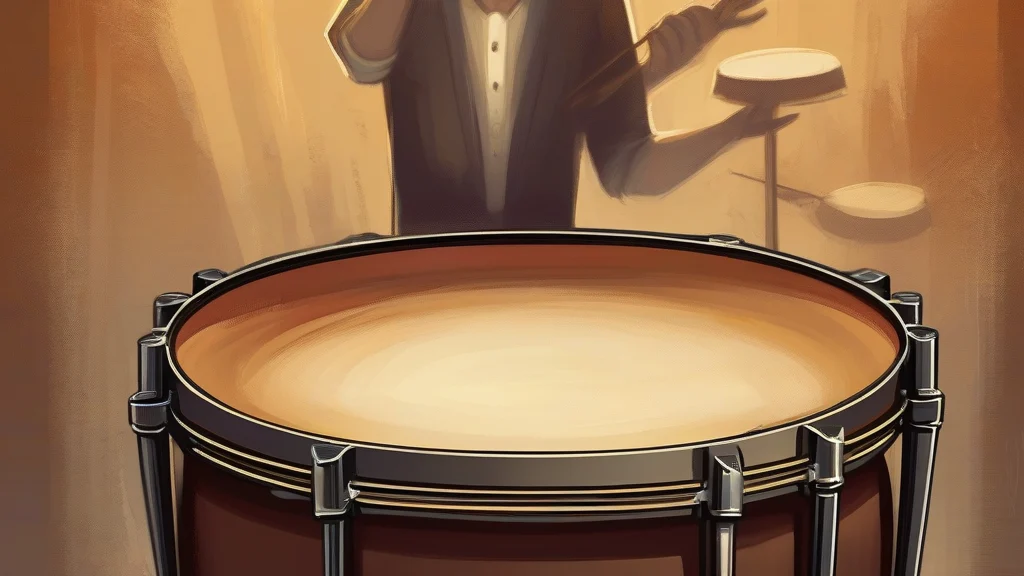
A timpano is a large kettledrum used in orchestral and band percussion. The instrument has a bowl-shaped body and a stretched membrane that is struck with a padded mallet. Its pitch can be changed by adjusting the tension of the membrane, allowing a player to produce a range of notes, usually on a pair of drums with different pitch ranges. Timpani provide the bass foundation for many percussion sections and are especially effective for dramatic entrances, sustained rolls, and thunderous effects. The singular form, timpano, is correct when one instrument is meant; timpani is the standard plural, especially when naming the complete pair or section. Although timpano is a precise specialist term, it is more informative than the general word drum when the orchestral instrument is intended. Its distinctive tuning mechanism and imposing sound make it one of the most recognizable instruments in classical and concert-band music.
nounA timpano is a large, bowl-shaped kettledrum used in orchestral and band percussion. It has a stretched membrane that can be tuned by altering its tension, and it is commonly played in a pair with different pitch ranges.
- A large, bowl-shaped kettledrum used in orchestral and band percussion, typically played in a pair and capable of producing different tuned pitches.
"The conductor cued the timpano for the dramatic entrance at the end of the movement."
"The timpano player followed the conductor's gesture and rolled the cymbal into the final cadence."
"In the score, the timpano is marked to sound beneath the low strings during the storm scene."
The standard plural is timpani, especially when referring to the pair of drums or the percussion section.
"The timpani were tuned before the concert began."
Behind the timpano's thunder is a remarkably precise tuning system: its pitch can be adjusted by changing the tension of the drumhead.
Reviewed by Deb Chak, Editor. AI-assisted content curated by RJS Tech Solutions LLP.
Where does timpano come from?
The word entered English from Italian timpano, which in turn derives from Latin tympanum. Latin tympanum was borrowed from Greek tympanon, a word associated with a drum or a drumhead, and ultimately with the Greek tympanon, a tambourine-like instrument. The English musical term developed in the context of orchestral percussion and has relatives such as tympanic and tympanist.
Related word forms
How timpano is actually used
Timpano is primarily a formal musical term. In ordinary discussion, musicians often use the plural timpani even when referring to the pair as an ensemble or section.
Easily confused with timpano
Timpano is the singular form, while timpani is the standard plural; the instruments are usually played in a pair.
Timpano is the usual English name for the orchestral kettledrum, whereas tympanum is a formal term that can refer to the eardrum or, in some contexts, the instrument or its membrane.