
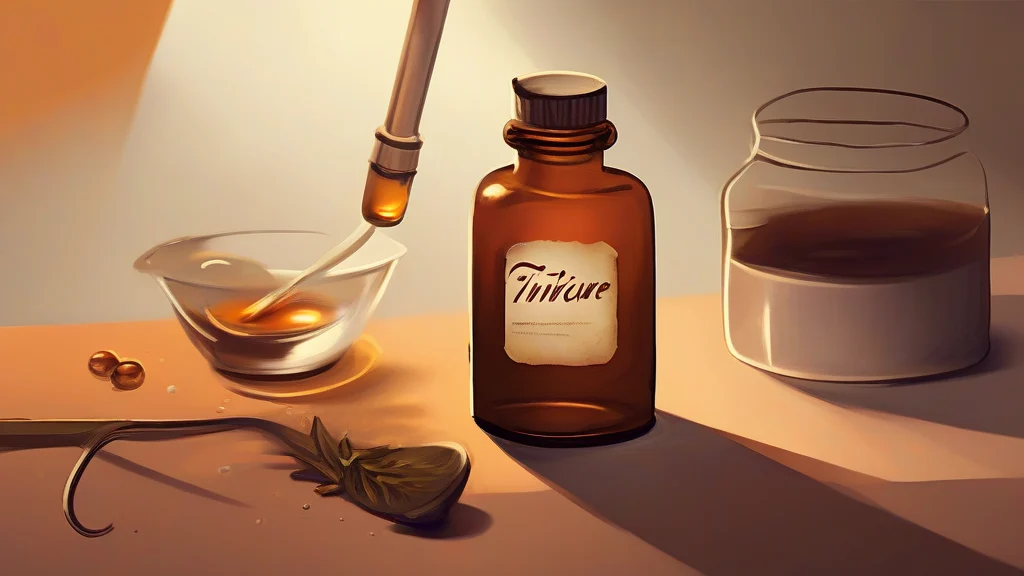
What does tincture mean?
A tincture is a liquid preparation in which medicinal, aromatic, or colouring substances are dissolved, usually in alcohol or ethanol. In modern herbal medicine, tinctures are concentrated extracts prepared from plants and are commonly administered in small doses. The word can also refer to a coloured alcoholic solution used for staining or tinting, and, in more literary contexts, to a faint trace or suggestion of something. Its formal and technical character distinguishes it from a general term such as medicine or potion, although these words can overlap in meaning. Tincture is especially useful for describing preparations that combine extraction with preservation, since alcohol helps draw out active compounds and can keep the resulting liquid stable. Historically, the word also covered the idea of colouring or dyeing, which explains the connection with words such as tinge and tint.
An alcoholic or ethanolic solution of medicinal, aromatic, or colouring substances; especially, a concentrated herbal or medicinal preparation.
"The pharmacist prepared a tincture of gentian for the bitter tonic."
The medicinal sense is now dominant, while the colouring and trace-related senses are less common.
To tinge or colour something, especially by applying a tincture or coloured solution.
"The artist tinctured the paper with a pale wash of amber."
This is a relatively rare verb, more common in literary, historical, and specialist contexts.
The standard plural of the noun is tinctures, used for individual medicinal or aromatic preparations.
"The shop sells tinctures of herbs and spices in small glass bottles."
From the Latin verb tingere, meaning “to dye,” tincture began as a coloured liquid before becoming a concentrated medicinal preparation.
Reviewed by Deb Chak, Editor. AI-assisted content curated by RJS Tech Solutions LLP.
Where does tincture come from?
Tincture comes from Latin tinctūra, meaning “a dyeing” or “dyeing,” derived from tingere, “to tinge or dye.” The English word developed in the early 17th century for a substance used to colour materials and was later applied to medicinal preparations made by dissolving substances in alcohol. Its Latin relatives include tinctus, the source of tint, while the root is also reflected in English words such as tinge and tinct.
Related word forms
How tincture is actually used
The noun is chiefly formal or specialist, especially in pharmacy, herbal medicine, and historical writing. It normally denotes a liquid preparation in alcohol, rather than a general medicine or syrup; figurative uses suggesting a slight trace are literary and relatively uncommon. The verb is rare and usually means to tint or colour.