
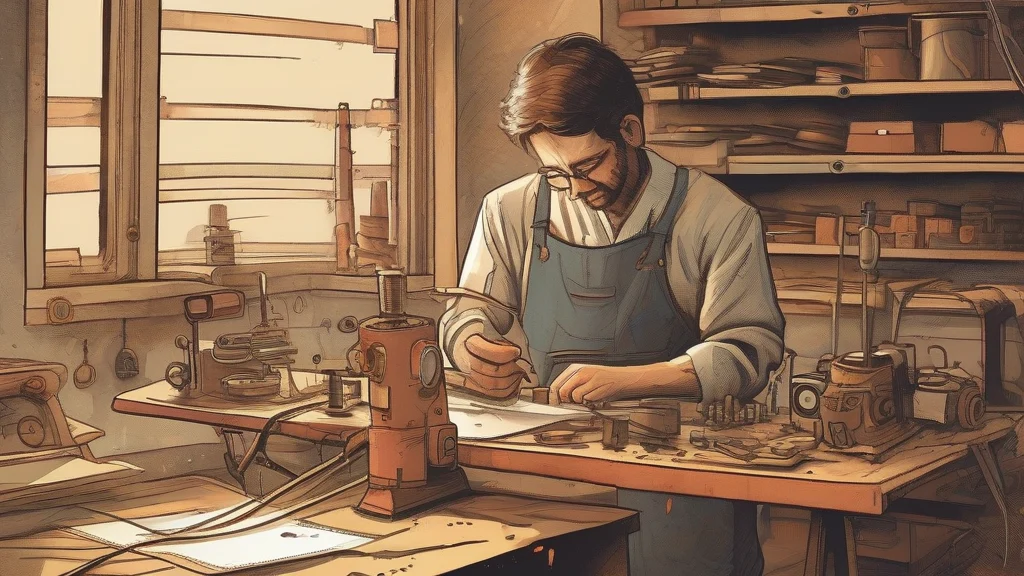
What does tinkering mean?
Tinkering is the activity of making small adjustments, repairs, or experimental changes to a device, system, or project. It often implies hands-on work rather than formal planning or major reconstruction. The word can be approving when it describes patient experimentation or the restoration of something old: a little tinkering may bring a neglected machine back to life. It can also be mildly critical when it suggests unnecessary fiddling or minor revisions that do not solve a larger problem. In political, legal, and business contexts, tinkering often implies modifying an existing arrangement without fundamentally redesigning it. The word is used in both British and American English and is related to tinker and tinkerer. Its history connects the modern activity with the skilled work of itinerant smiths and repairers, while its contemporary meaning extends to almost any process of careful adjustment and experimentation.
The activity of making minor adjustments, repairs, or experimental changes to something.
"The radio needed a bit of tinkering before it would work."
Usually a mass noun, especially when referring to an ongoing activity.
To make minor adjustments or repairs, or to work on something experimentally and informally.
"He spent the evening tinkering with an old radio."
Often used with "with" or "away at" and sometimes implies activity that is informal, repetitive, or not fully systematic.
Tinkering is normally uncountable. The plural "tinkerings" occurs occasionally when individual small modifications are being counted, but it is uncommon.
"The engine started after a few minutes of tinkering."
The word once referred to itinerant smiths; today it often captures the urge to improve something by making one small change at a time.
Reviewed by Deb Chak, Editor. AI-assisted content curated by RJS Tech Solutions LLP.
Where does tinkering come from?
Tinkering was formed from tinker by adding the suffix -ing, which creates both the present participle and the gerund. Tinker originally referred to an itinerant smith or metalworker and later broadened to mean a person who makes small repairs or adjustments. The related tink developed in the same general area of language concerning small work or tinkering with metal objects.
Related word forms
How tinkering is actually used
The word is neutral to informal in most contexts. It can be approving, describing practical experimentation, but it may also carry a mildly critical connotation when repeated small changes produce little progress. British usage sometimes overlaps with the sense of "pottering about."
Easily confused with tinkering
Tinker is the base verb and can also name a person who makes minor repairs or adjustments, whereas tinkering names the activity itself.
Tinkering usually implies minor or experimental alterations, while tampering often suggests interfering with something improperly or irresponsibly.