
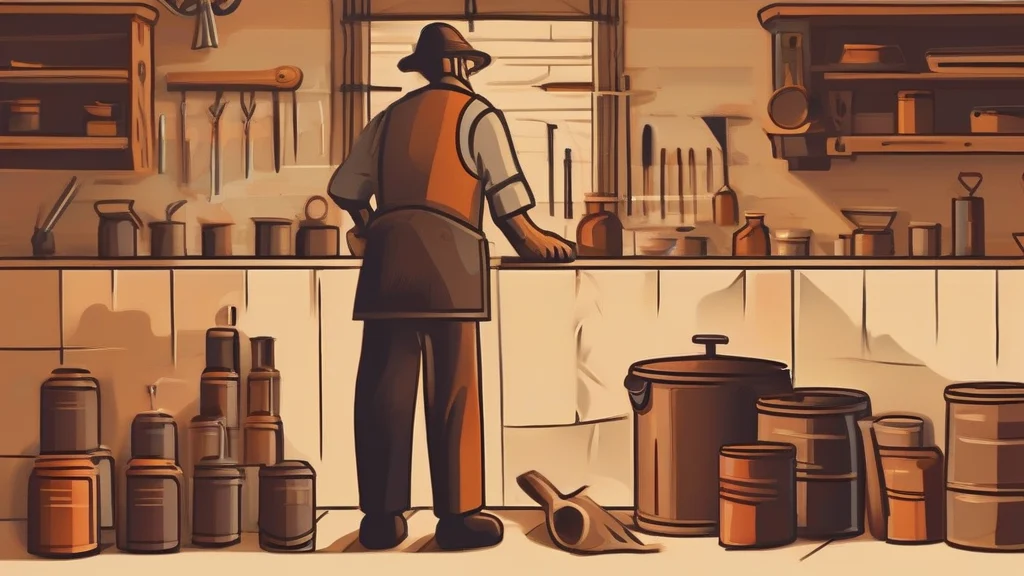
What does tinsmith mean?
A tinsmith is a craftsperson who makes or repairs objects from tin or tinplate, particularly household vessels, utensils, and other small metal articles. Historically, tinsmiths were important local tradespeople: they cut, formed, and soldered sheet tin into durable objects and repaired damaged or worn items. The term can sound quaint today, but it also describes a real workshop tradition rather than a vague old-fashioned skill. In British and American English, tinsmith may evoke village craftsmen, traditional cookware, and preindustrial craft production. Modern metalworkers, sheet-metal fabricators, and restorers may perform comparable tasks with contemporary tools and materials. The word remains useful because it names a specific trade and its historical place in everyday domestic life. Its transparent compound formation also reflects a characteristic English pattern of identifying a craft by the material a practitioner works in and the traditional title of an artisan.
nounA tinsmith is a craftsperson who makes or repairs objects from tin or tinplate, especially household vessels and utensils.
- A craftsman or craftsperson who makes or repairs objects from tin or tinplate.
"The village tinsmith repaired our dented cooking pots."
"The village tinsmith repaired our dented cooking pots."
"Her grandfather served an apprenticeship as a tinsmith before opening his own workshop."
The regular plural is tinsmiths, used when referring to multiple craftspeople.
"Two tinsmiths operated workshops on either side of the market."
Before factory-made cookware, a tinsmith hand-formed and soldered everyday household objects from sheet tin.
Reviewed by Deb Chak, Editor. AI-assisted content curated by RJS Tech Solutions LLP.
Where does tinsmith come from?
Tin is an English word inherited from Old English tīn, while smith comes from Old English smiþ, meaning a metalworker or craftsman. The compound tinsmith literally means a smith who works in tin and was established in English during the early modern period. Its meaning follows the traditional organization of trades by material, as with goldsmith, coppersmith, and silversmith.
Related word forms
How tinsmith is actually used
Used in British and American English, but today the word often sounds historical or nostalgic and evokes a traditional local trade.
Easily confused with tinsmith
A tinner can historically mean a tinsmith, but it also commonly denotes a worker in a tin mine, so context determines which trade is meant.