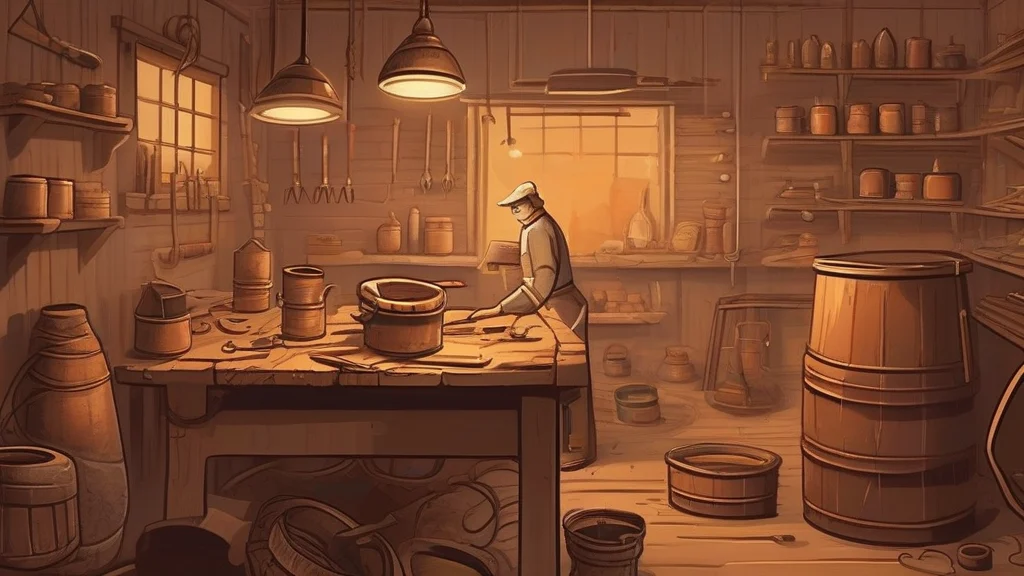
What does tinsmithing mean?
Tinsmithing is the craft of making or repairing objects from tin, typically by shaping and soldering. This traditional skill has been passed down through generations, with many artisans continuing to practice and perfect their craft. Tinsmithing involves working with tin, a malleable and versatile metal, to create a wide range of objects, from decorative items to functional containers. The process requires great skill and attention to detail, as the metal must be carefully shaped and soldered to achieve the desired form and structure. Tinsmithing is often associated with traditional or artisanal metalworking techniques, and is highly valued for its beauty and craftsmanship. While modern manufacturing techniques have largely replaced traditional tinsmithing, many people continue to appreciate and practice this ancient craft.
nounThe craft of making or repairing objects from tin, especially by shaping and soldering.
- The craft of making or repairing objects from tin.
"The tinsmithing skills he learned from his grandfather allowed him to create intricate tin decorations."
"The tinsmithing skills he learned from his grandfather allowed him to create intricate tin decorations."
"The antique tin cup was a beautiful example of tinsmithing from the 19th century."
The plural form 'tinsmithings' is used to describe multiple instances of tinsmithing, such as a collection of tin objects created by a skilled tinsmith.
"The museum exhibited a collection of tinsmithings from the 19th century."
Reviewed by Deb Chak, Editor. AI-assisted content curated by RJS Tech Solutions LLP.
Etymology of tinsmithing
The word 'tinsmithing' is derived from the Old English words 'tin' and 'smith', with the suffix '-ing' indicating a process or activity. The term has been in use since the 16th century, when tin was a common material for making objects such as cups, plates, and other household items.
How tinsmithing is actually used
Tinsmithing is often used to describe traditional or artisanal metalworking techniques.