
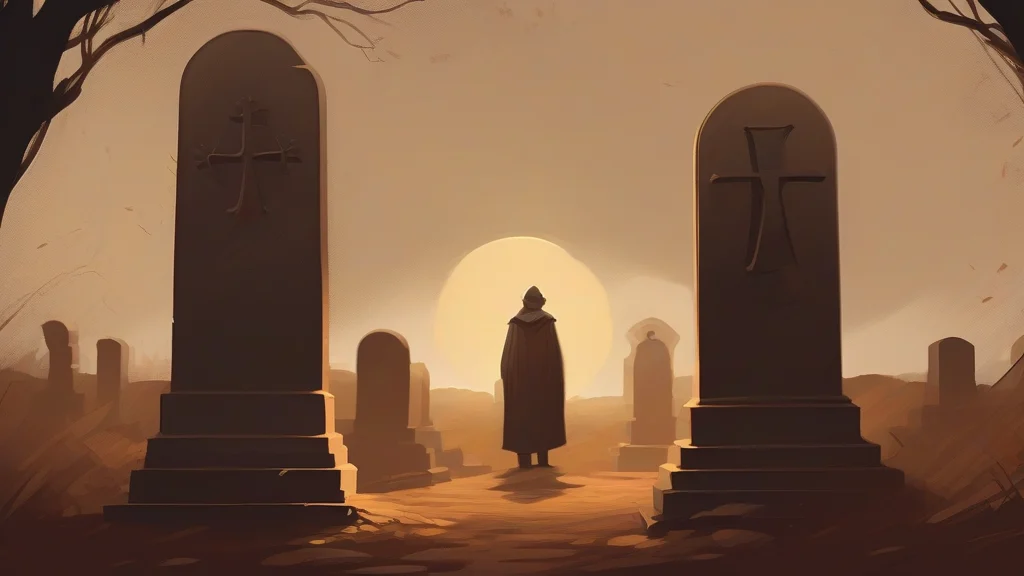
What does tombless mean?
Tombless is an adjective meaning without a tomb, sepulchre, or other recognized place of burial. The word is literary and uncommon, but its force comes from the contrast it draws between physical remains and the monuments traditionally associated with them. A person or body described as tombless has not been given a permanent grave, while a tombless cemetery is a place where burials may once have occurred but the tombs and memorial stones have disappeared. The term often carries associations with ruin, war, neglect, historical loss, or the passage of time. It can also be used more figuratively to describe a place stripped of its memorials or a person denied remembrance. Although relatively rare in everyday speech, tombless is useful when a precise distinction is needed between a burial that lacks a tomb and one that has simply not been excavated or identified.
adjectiveHaving no tomb or sepulchre; lacking a place of burial or memorial.
- Having no tomb or sepulchre; lacking a place of burial or memorial.
"The ruined church left its saints lying tombless beneath the grass."
"After the flood, several bodies lay tombless beside the road."
"The abandoned cemetery was tombless, its memorial stones scattered across the grass."
A tomb gives a life a lasting address; tombless makes the absence of that address part of the image.
Reviewed by Deb Chak, Editor. AI-assisted content curated by RJS Tech Solutions LLP.
Where does tombless come from?
Tombless is formed in English by combining the noun tomb with the suffix -less, meaning “without.” The word tomb entered Middle English through Anglo-French tumbe and ultimately derives from Latin tumba, which was borrowed from Greek tymbos. Related English forms include tombstone, a marker associated with a burial place, while tombless applies the standard -less construction to the same noun.
How tombless is actually used
Tombless is a literary and relatively uncommon word. It is especially evocative in descriptions of graves, cemeteries, bodies, and figures from the past whose resting places have been lost or destroyed.
Easily confused with tombless
A tombstone is a stone marker associated with a burial place, whereas tombless describes something that has no tomb at all.