
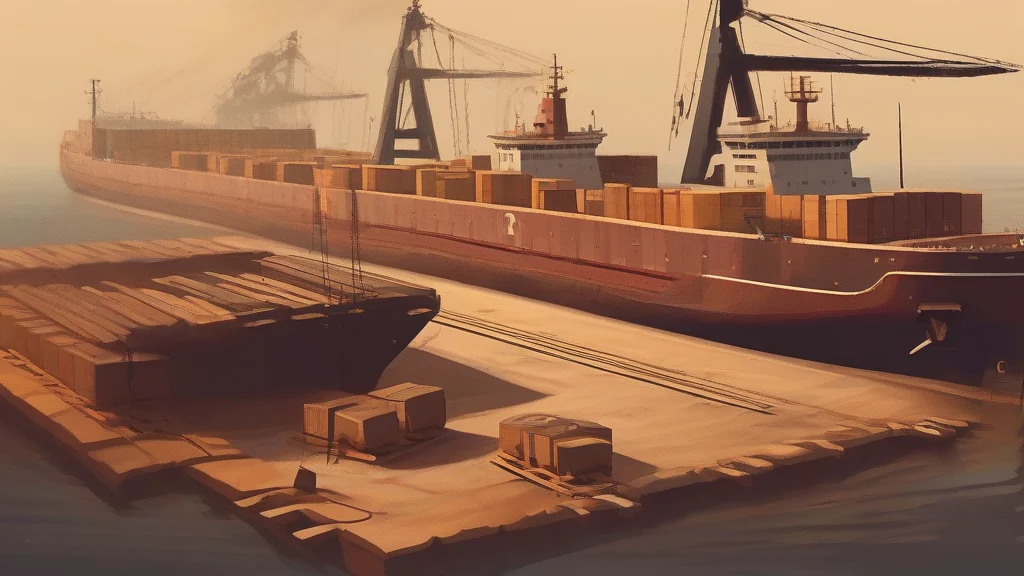
What does tonnage mean?
Tonnage is a specialized form of measurement used chiefly in shipping, transport, and port administration. Most commonly, it denotes the amount of cargo a vessel can carry or the weight of cargo it is carrying. In modern nautical usage, however, the word can also refer to a vessel's enclosed volume or a standardized measure of its usable capacity, as in gross and net tonnage. The meaning therefore depends on context: commercial documents may use tonnage for freight totals, while ship registries use particular tonnage systems to characterize vessels. The term is formal and technical rather than everyday, but it remains useful because it compresses several related ideas—mass, load, and vessel capacity—into a familiar shipping term. Its distinction from the metric unit tonne can also matter in international trade, where cargo mass is often calculated precisely in tonnes while tonnage describes a ship or shipment more broadly. Tonnage can also appear in historical contexts as a tax or duty based on a ship's estimated cargo capacity. Across these uses, the core idea is an amount or measure associated with what a ship can carry or does carry.
nounThe weight of cargo carried or capable of being carried by a ship, often expressed in tons. In nautical measurement, it can also refer to a ship's enclosed volume or standardized measure of usable capacity, as in gross and net tonnage.
- The amount of cargo a ship can carry or is carrying.
- A measure of a vessel's enclosed volume or standardized usable capacity, especially in gross, net, and register tonnage.
- A weight or charge based on the cargo capacity of a ship, as in historical tonnage taxes.
"The port expanded its berths to accommodate vessels of greater tonnage."
"The freighter has a deadweight tonnage of 50,000 tonnes."
"The customs agent calculated the tonnage of all cargo entering the port."
Used for distinct measured amounts or rates, especially when comparing vessels or cargo shipments.
"The registry records the tonnages of ships certified for different routes."
A ship's tonnage can describe how much it can carry—or how much space it encloses.
Reviewed by Deb Chak, Editor. AI-assisted content curated by RJS Tech Solutions LLP.
Where does tonnage come from?
Tonnage is a Middle English formation from tonne with the suffix -age, a combining form that can indicate an amount or system of measurement. The element tonne came into English through French, while French tonne derives from Medieval Latin tonna. The related English words ton and tun came through the same French and medieval Latin vocabulary, although their modern meanings range from units of mass to large containers.
How tonnage is actually used
The term is chiefly formal and technical, especially in shipping, freight, port administration, insurance, and vessel registration. Its precise sense depends on the measurement system or context.
Easily confused with tonnage
A tonne is a metric unit of mass equal to 1,000 kilograms, whereas tonnage is a measure of cargo weight, carrying capacity, or ship volume.