
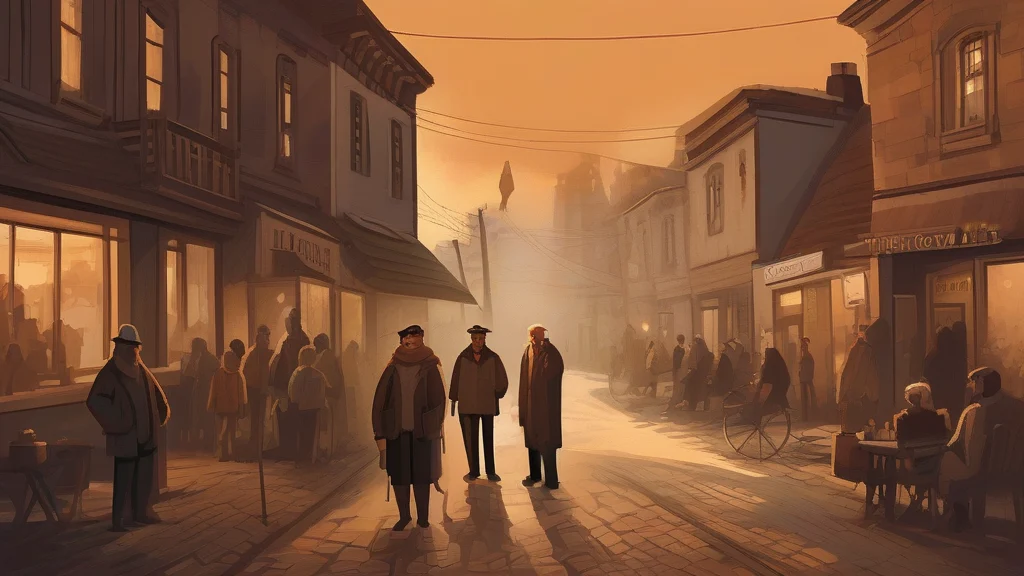
What does townspeople mean?
Townspeople means the people who live in a town or city, considered collectively. Its usual implication is the ordinary inhabitants of a place viewed as a community: neighbors, local families, shopkeepers, workers, and others who form the everyday life of the town. The term is also frequently contrasted with prominent residents, tourists, or outside authorities. Because it is plural and collective, it normally takes a plural verb and emphasizes the group rather than any one individual. Though clear and traditional, the word can sound formal or literary in ordinary conversation, where residents, locals, or townsfolk may sound more natural. Townspeople is especially useful when discussing how a community thinks, behaves, or reacts as a whole. It can carry friendly warmth when referring to welcoming neighbors, but it may also imply social conformity, shared assumptions, or resistance to outsiders. These associations depend on context rather than being inherent to the word.
plural nounThe inhabitants of a town or city collectively, especially when regarded as an ordinary local community.
- The inhabitants of a town or city collectively, especially ordinary residents viewed as a local community.
"The townspeople welcomed the visitors with an evening of music and local food."
"Many of the townspeople had known one another for most of their lives."
"The novel portrays the townspeople as cautious about outsiders and eager to preserve their traditions."
The word is itself a collective plural and has no regular singular form. It normally takes a plural verb.
"The townspeople are preparing for the annual festival."
Townspeople puts the whole community on stage: one word can turn neighbors, shopkeepers, elders, and families into a shared cast.
Reviewed by Deb Chak, Editor. AI-assisted content curated by RJS Tech Solutions LLP.
Where does townspeople come from?
Townspeople combines town and people and was established in English by the early modern period. Town descends from Old English tūn, meaning an enclosed settlement or group of dwellings, while people came through Old French from Latin populus. The latter root also underlies words such as popular, population, and populous.
How townspeople is actually used
The word is normally treated as plural and usually takes a plural verb. It has a formal or literary tone and often suggests residents viewed collectively as part of a local community rather than officials, visitors, or exceptional individuals.
Easily confused with townspeople
Townsman refers specifically to a male inhabitant of a town, whereas townspeople is a gender-neutral collective noun for the town's inhabitants.