
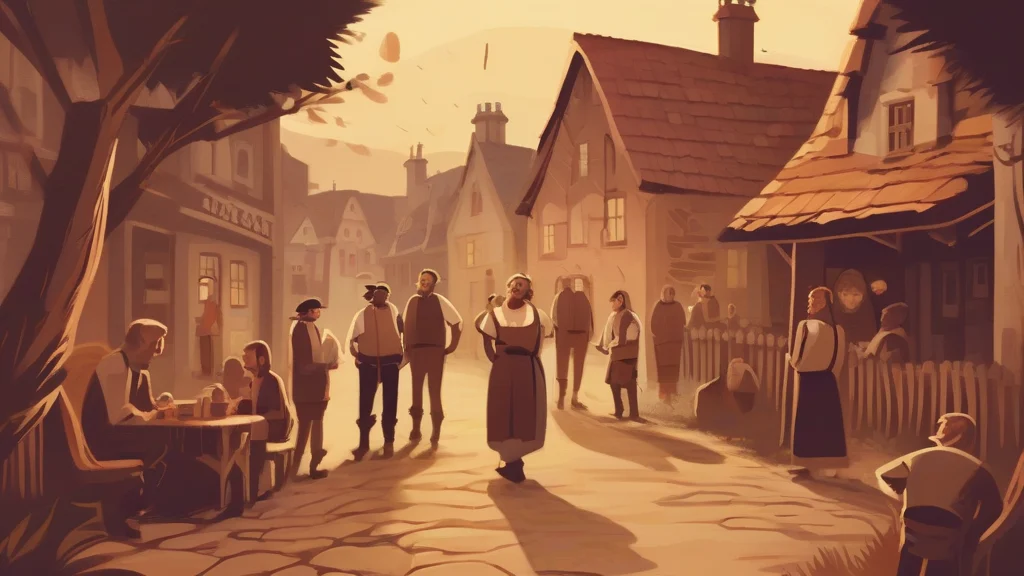
What does townsfolk mean?
Townsfolk means the inhabitants of a town viewed collectively. It can refer to the people living in a particular town, or more generally to people who belong to a town and are encountered elsewhere as representatives of their home community. The word is especially useful when the focus is on shared local identity rather than on individuals: one can speak of the townsfolk supporting a festival, opposing a proposal, or welcoming visitors. Its connotation is generally friendly and communal, although historical and literary uses can evoke traditional village or small-town life. Although “townsfolk” is grammatically plural, it normally refers to a group as a whole. Related expressions include “townspeople,” while “locals” and “residents” are broader or more neutral alternatives. The word combines the idea of a town with the older sense of folk as a people or community, giving it a strong sense of belonging, solidarity, and shared civic life.
nounThe inhabitants of a town collectively. The term can also refer more broadly to people who come from a particular town, especially when viewed from outside it.
- The inhabitants of a town considered as a group.
- People belonging to or originating from a particular town, especially when contrasted with outsiders.
"The townsfolk gathered at the market to celebrate the annual festival."
"The townsfolk were proud of the new library, which they had built through their own efforts."
"Visitors were welcomed warmly by the townsfolk, who were eager to share local traditions."
This is normally a plural noun with no standard singular form; it refers collectively to the inhabitants of a town.
"The townsfolk were gathered in the town square."
A town may have many individual stories, but townsfolk names the collective voice.
Reviewed by Deb Chak, Editor. AI-assisted content curated by RJS Tech Solutions LLP.
Where does townsfolk come from?
Townsfolk is an English compound formed from town and folk. Folk derives from Old English fōolc, meaning a people or community, while town comes from a separate Germanic and Romance word history concerning an enclosed settlement or urban community. The compound became established in English during the Middle English period and developed its collective sense of a town's inhabitants. Its roots are reflected in related forms such as folklore, folkway, and township, while Dutch volk and German Volk provide cognates of the older English word folk.
How townsfolk is actually used
Townsfolk is normally a plural, collective noun, though it may take a singular verb when emphasizing the group as one unit. It has a warm, communal, and sometimes traditional tone, and is often used in literary or nostalgic contexts.