
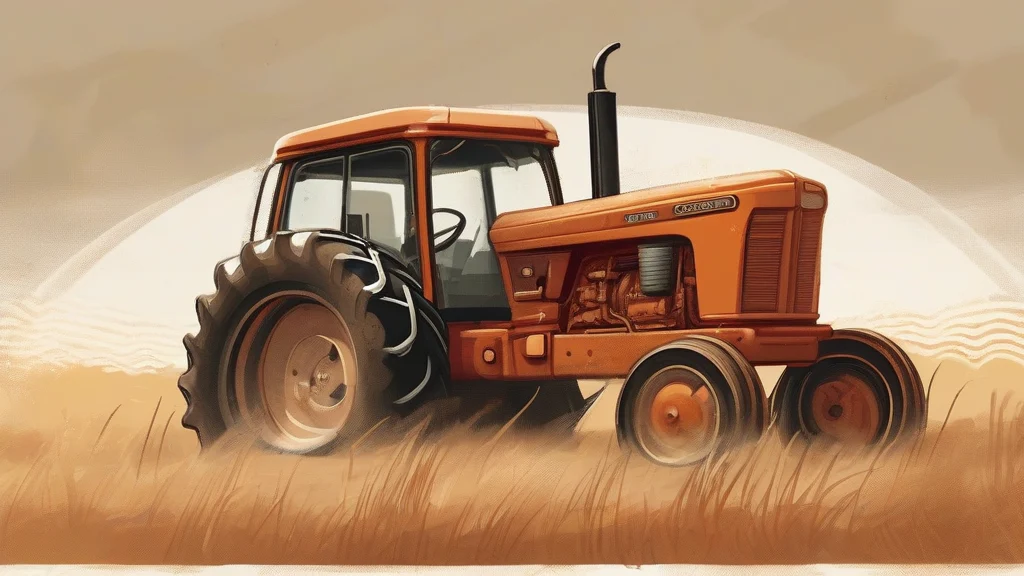
What does tractor mean?
A tractor is a powerful motor vehicle designed to pull equipment, haul loads, or push and tow other vehicles. Its best-known use is on farms, where a tractor provides the power for ploughing, cultivating, and transporting materials. In road transport, the term can also denote the heavy cab unit that pulls a semitrailer, while airport and towing contexts use it for specialized vehicles that move aircraft or equipment. As a verb, “to tractor” means to work the land with a tractor; this use is uncommon compared with the noun. The word is neutral in register and familiar in both British and American English. Its history makes it especially memorable: the name ultimately comes from Latin trahere, “to draw or pull,” the same root that gives us “traction.” Thus, a tractor is in a sense a modern machine named for an ancient physical action. The word is useful because it identifies a versatile source of motive power while allowing the context—farm, road, or airfield—to specify the machine’s job.
A powerful motor vehicle used to pull agricultural machinery, haul trailers, or move other vehicles and equipment.
"The new tractor made the long workday in the fields much easier."
The meaning varies by context: it commonly denotes a farm vehicle, a road-hauling unit, or specialized towing machinery.
To cultivate, work, or harvest with a tractor.
"They tractor the fields twice a year to prepare the soil for planting."
This verb is uncommon and is chiefly used in agricultural contexts.
The standard plural adds -s and is used with both count and measure constructions.
"Two tractors were parked beside the equipment shed."
A tractor is named for what it does: its Latin ancestor means “to pull,” the same root that produced “traction.”
Reviewed by Deb Chak, Editor. AI-assisted content curated by RJS Tech Solutions LLP.
Where does tractor come from?
The word is built on the Latin verb trahere, “to draw or pull,” through forms such as tractus and the Latin agent noun tractor, meaning “one who draws.” English “tractor” emerged in the nineteenth century in connection with traction and traction engines. It later became standard for the mechanized farm vehicles that transformed agricultural fieldwork.
Related word forms
How tractor is actually used
The noun is neutral in register and common in both British and American English. It may denote a farm machine, a road-hauling vehicle, or specialized towing equipment according to context. The verb is comparatively rare and is chiefly associated with agricultural work.
Easily confused with tractor
A tractor is a powered vehicle that pulls or pushes equipment, whereas a trailer is an unpowered vehicle designed to be towed.