
What does trundle mean?
Trundle means to move, roll, or progress slowly, usually with the weight and effort associated with something heavy or awkward. A cart may trundle along a road, a person may trundle a large suitcase through a station, or an afternoon may trundle on toward evening. The verb frequently suggests a steady pace rather than a sudden stop, although its heavy, slightly comic sound makes it especially effective when describing old vehicles, tired people, or conspicuously large loads. In British English it is particularly common, while American speakers also use it readily. Trundle can additionally refer to a small wheel or roller, and the established compound “trundle bed” names a low bed mounted on casters. Although the modern word is most often encountered as a verb, its imagery of rolling motion is consistent with the gentle, unglamorous movement it now conveys.
To move, roll, or progress slowly, especially with a heavy or cumbersome motion; also, to cause something to move by rolling, pushing, or carrying it.
"The delivery driver trundled the empty crates back to the van."
Often conveys gentle comedy or emphasizes slowness, weight, and effort.
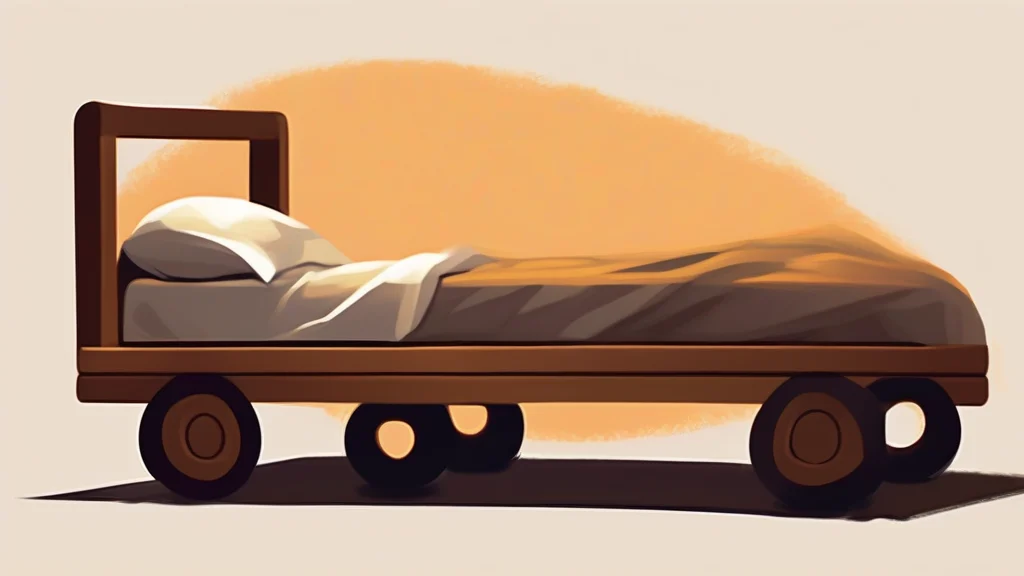
A small wheel or roller; also, a low bed on wheels or casters, now usually called a trundle bed.
"A wooden trundle was tucked beneath the sleeping child."
The standalone noun is uncommon today and survives chiefly in historical usage and the compound “trundle bed.”
The regular plural is grammatically standard, though plural forms are rarely needed in modern usage.
"The mechanic replaced two damaged trundles on the cart."
Trundle turns an ordinary journey into the patient, heavy motion of a small wheel or an old cart.
Reviewed by Deb Chak, Editor. AI-assisted content curated by RJS Tech Solutions LLP.
Where does trundle come from?
The exact ultimate origin of trundle is uncertain. It is recorded in English before the modern period in senses associated with wheels, rollers, and moving objects, and the verb subsequently developed its familiar meaning of traveling or progressing slowly. Its present use remains especially associated with rolling movement and the laborious, unhurried progress of a cart or similarly cumbersome thing.
How trundle is actually used
The verb is informal to neutral and often conveys an unhurried, cumbersome, or mildly humorous quality. It is especially common in British English but is also understood and used in American English.