
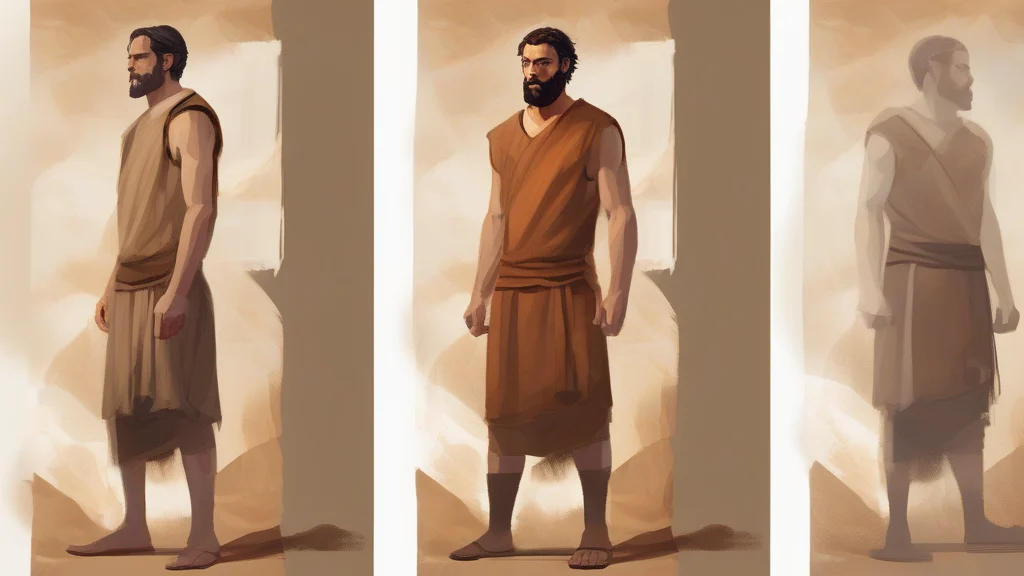
What does tunic mean?
A tunic is a garment worn over the upper body, usually extending from the shoulders to the hips or knees and often fastened at the neck or waist. In everyday modern usage, the word suggests a simple, loose shirt-like top, especially one associated with traditional, historical, or ceremonial dress. A tunic can also mean a close-fitting jacket worn as part of a military uniform. In some Christian liturgical settings, it names a long clerical robe, while in historical writing it can refer to the characteristic garments of ancient Greek and Roman people. The word comes through French from Latin tunica, the ordinary garment worn beneath the toga. Although the fashions have changed greatly, the basic idea of a simple body-covering garment has remained remarkably stable. Today, tunic is useful for distinguishing loose upper-body garments from more fitted shirts, and it carries historical and institutional associations that a generic word such as top does not.
nounA tunic is a loose or close-fitting upper-body garment, typically extending from the shoulders to the hips or knees. The term also refers to military jackets, long ecclesiastical robes, and the garments worn by ancient Greeks and Romans.
- A loose, shirt-like garment reaching to the hips or knees, worn as everyday clothing or as part of a traditional or ceremonial outfit.
- A close-fitting jacket forming part of a military uniform.
- A long robe worn by Christian clergy, especially in certain Anglican and other liturgical traditions.
- A garment of ancient Greece or Rome, usually worn as the principal item of dress.
"She wore a simple linen tunic over a long skirt."
"The guide wore a cream-colored tunic with a narrow belt."
"Each morning, the soldiers buttoned their tunics before inspection."
The standard plural of tunic.
"Several brightly patterned tunics hung in the market stall."
The word for a simple garment carries a grand history: it began as everyday clothing in ancient Rome and still survives in soldiers’ jackets and clergy’s robes.
Reviewed by Deb Chak, Editor. AI-assisted content curated by RJS Tech Solutions LLP.
Where does tunic come from?
English tunic comes from Middle English tunike or tunic, borrowed from Old French tunique, which represents Latin tunica. Latin tunica was a garment worn by both men and women, including beneath the toga. The English word developed in contexts ranging from ancient costume to military and clerical clothing, and its relatives include French tunique and the Latin-based tunicle.
Related word forms
How tunic is actually used
In modern general use, tunic usually suggests a simple, loose garment and can sound traditional, historical, or uniform-like. In military contexts it is a formal term for a uniform jacket; in church contexts it may be specialized and regionally or institutionally restricted.