
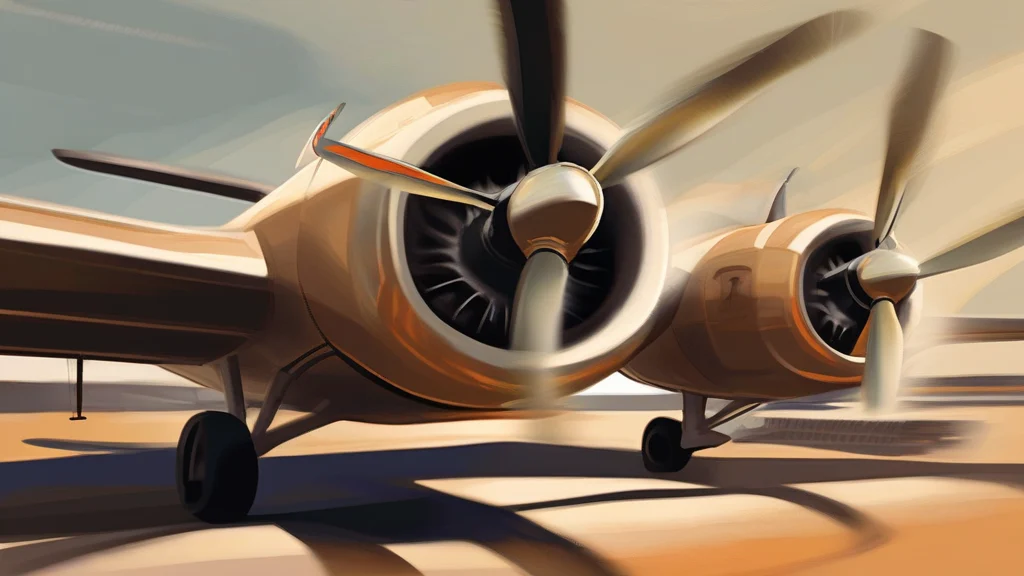
What does turboprop mean?
A turboprop is an aircraft, or the propulsion system itself, that uses a turbine engine to turn a propeller. The turbine powers the propeller through a shaft, usually with a reduction gearbox, so the propeller provides the thrust rather than the engine exhausting gases directly. This arrangement is efficient at the lower speeds and altitudes associated with regional and utility flying, making turboprops common among commuter, cargo, and general-aviation aircraft. The word also appears in discussions of aircraft types, maintenance, and airline operations. Although a turboprop burns fuel in a turbine, it differs fundamentally from a turbojet or turbofan, both of which produce thrust from exhaust gases. Turboprop is therefore more precise than the broad term propeller aircraft, which can include aircraft with piston engines.
nounA turboprop is an aircraft powered by a turbine engine that drives a propeller through a shaft and reduction gearbox. The term can also refer to the turbine-and-propeller powerplant itself.
- An aircraft powered by a turbine engine that transmits its power to a propeller.
- A turbine-and-propeller propulsion system.
"The turboprop crossed the bay in heavy rain, its propeller cutting a steady rhythm through the mist."
"The twin-turboprop aircraft was able to cross the mountains despite the approaching storm."
"Engineers inspected the turboprop's gearbox after the pilot reported unusual vibration."
The standard plural is turboprops, used for multiple aircraft or propulsion systems.
"The airline ordered ten turboprops for its regional routes."
Instead of blasting the aircraft forward with exhaust, a turboprop spins a propeller through a shaft.
Reviewed by Deb Chak, Editor. AI-assisted content curated by RJS Tech Solutions LLP.
Where does turboprop come from?
The aviation term developed in the mid-20th century from turbo-propeller, combining turbo- with propeller. Turbo comes through French from the Latin turbo, meaning a spinning or rotation, while propeller derives from the Latin propellere, meaning to drive forward. The compound reflects the operating principle: a turbine supplies the power that drives the propeller. Related English words include turbine and turbocharger from the first root, and propulsion and propeller from the second.
Related word forms
How turboprop is actually used
Turboprop is standard aviation and engineering terminology. It is more precise than the broader expression propeller aircraft, which can also include piston-engined planes.
Easily confused with turboprop
A turboprop drives a propeller with a shaft, whereas a turbojet produces thrust directly from the engine's exhaust gases.