
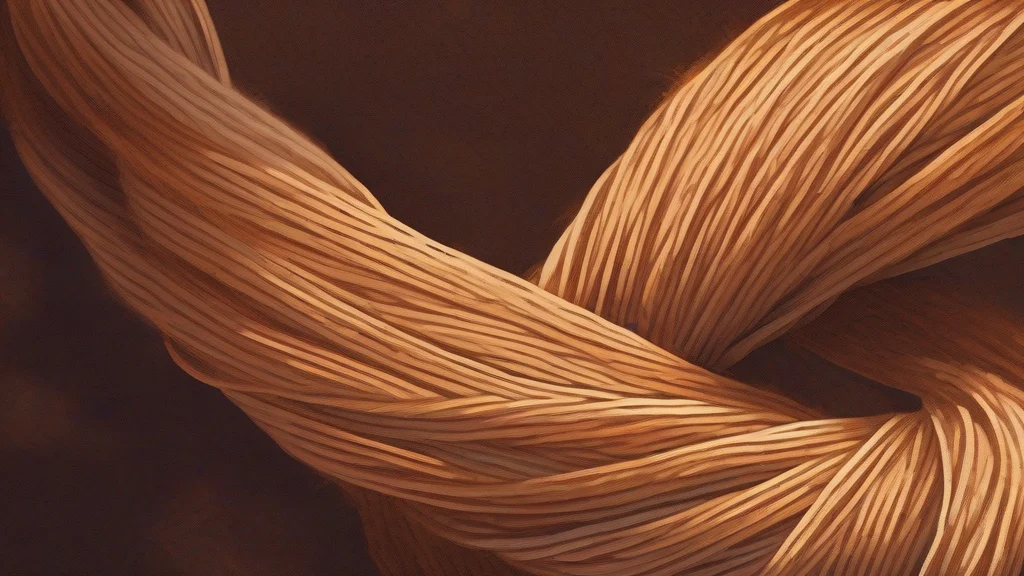
What does twilling mean?
Twilling means twilled: it describes cloth or a surface woven with a twill, the weave recognizable by diagonal ribs. In ordinary prose the word is uncommon, but it is useful in textile description and in literary or historical contexts where concise texture language is preferred. The term points to structure rather than merely color or design, since a twilled fabric gains its characteristic slant from the arrangement and offset of its warp and weft threads. Twilling can also be understood as the present participle of twill, meaning to weave fabric in that pattern. As an adjective, it is closest to twilled, while plain-woven provides a straightforward contrasting term. Although it is not a modern household word, twilling offers textile specialists, designers, and readers of older descriptions a precise way to distinguish a diagonal weave from other fabric structures, making it a compact and revealing piece of vocabulary.
adjectiveHaving or displaying a twill weave; twilled.
- Having or displaying a twill weave; twilled.
"A fine twilling pattern gives the coat its diagonal texture."
"A fine twilling pattern gives the coat its diagonal texture."
"The workshop is known for its densely twilling woolens."
A twill’s telltale diagonal line comes from neighboring yarns sitting at a slight offset, turning a simple crossing into a ribbed texture.
Reviewed by Deb Chak, Editor. AI-assisted content curated by RJS Tech Solutions LLP.
Where does twilling come from?
Twilling was formed from the English noun twill with the suffix -ing. In textile usage, twill names a weave distinguished by diagonal ribs, while twilling developed as a process term and an adjective meaning twilled. The earlier history of twill itself is less certain, so it should not be assigned a definitive source without specialist evidence.
How twilling is actually used
Chiefly a textile term and now somewhat literary. It may also be encountered as the present participle of the verb twill, meaning to weave fabric in a diagonal pattern.
Easily confused with twilling
Twill names the diagonal weave or the verb of weaving fabric in that pattern, whereas twilling is chiefly an adjective describing a material with such a weave.