
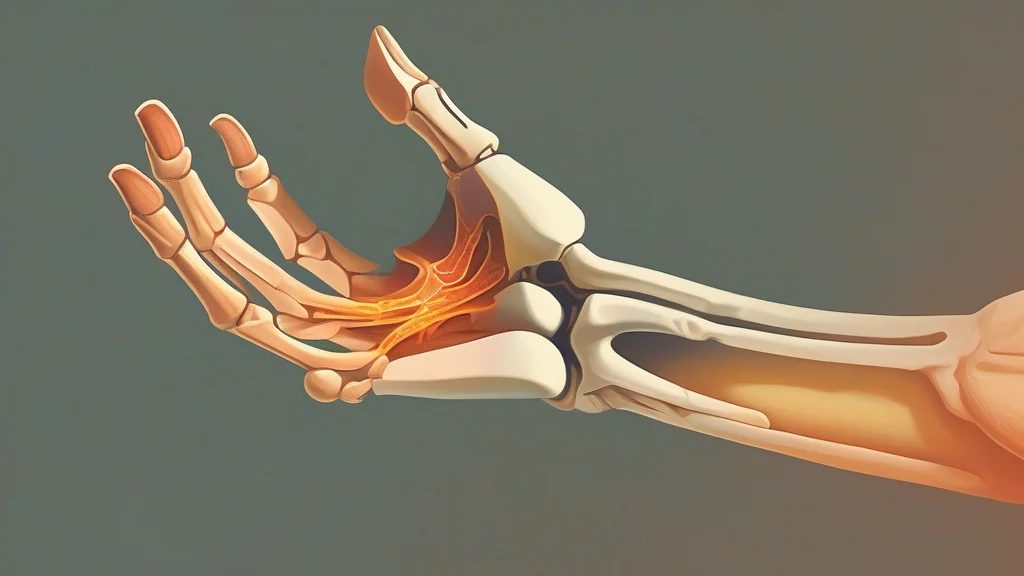
What does ulna mean?
The ulna is the larger of the two bones in the human forearm. It lies on the same side as the little finger, opposite the radius, and connects the wrist to the elbow. At its upper end, it forms much of the elbow joint and articulates with the humerus, the bone of the upper arm; at its lower end, it meets the radius and the carpal bones of the wrist. The term is used especially in anatomy, medicine, surgery, and discussions of fractures or athletic injuries. A fracture of the ulna may occur during falls, collisions, or other forms of trauma, and treatment depends on the location and severity of the break. Although commonly paired with the radius, the ulna is a distinct bone rather than a name for the forearm as a whole. Its name comes from Latin ulna, a term associated with the forearm and elbow.
nounThe ulna is the bone of the forearm on the side of the little finger. It lies opposite the radius and forms much of the elbow joint.
- The larger bone of the forearm, situated on the little-finger side and opposite the radius.
"The X-ray showed a fracture at the distal end of the ulna."
"The surgeon explained that the ulna was fractured but that the radius had not been damaged."
"Anatomical study of the elbow is essential for understanding how the proximal ulna articulates with the humerus."
The standard anatomical plural is ulnae; ulnas is also used, especially in general and clinical writing.
"Both ulnae were examined for fractures."
The ulna takes its name from a Latin word that originally referred to the elbow, a fitting origin for the bone that helps form the elbow joint.
Reviewed by Deb Chak, Editor. AI-assisted content curated by RJS Tech Solutions LLP.
Where does ulna come from?
The English word ulna comes from Latin ulna, which was used for the forearm and especially the elbow. Latin ulna is generally traced to the ancient Greek olénē, meaning “elbow” or “forearm.” English derivatives such as ulnar and ulnate preserve the Latin stem, while olecranon comes through Greek from the same Greek base associated with the elbow.
How ulna is actually used
This is a technical anatomical term, usually used in medicine, biology, physical education, and related fields. It is not ordinarily used for the whole forearm or elbow joint.