
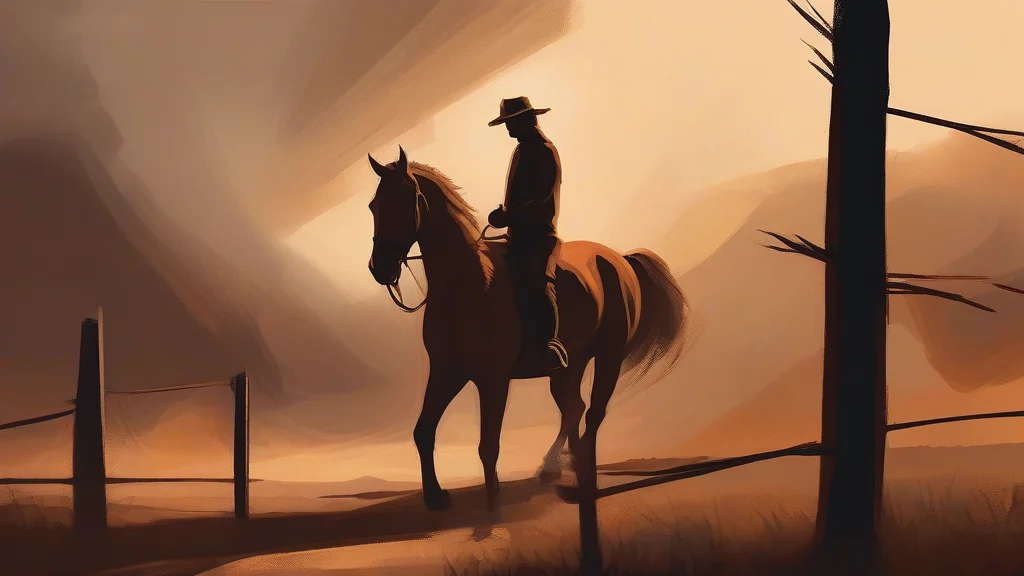
What does unbridling mean?
Unbridling means removing a bridle, but it is more often used figuratively to describe the release of people, institutions, forces, or ideas from restraint or control. In its literal sense, it refers to unfastening the bridle on a horse or other animal. Figuratively, the word can describe political liberalization, the loosening of restrictive regulations, the release of creative energy, or the emergence of powerful emotions. It often carries a positive or dramatic connotation, suggesting that an important restraint has been removed, although it may also warn that freedom without control could have disruptive consequences. Because it develops from the familiar image of a horse's bridle, unbridling provides a vivid metaphor for sudden liberation. The word is uncommon in everyday conversation but appears in formal, literary, and analytical writing, where it gives greater emphasis and imagery than the plainer words “freeing” or “releasing.”
To remove a bridle from a horse or other animal; figuratively, to free from restraint or control.
"The protesters demanded a government unbridling the press."
The act or process of unbridling a person, animal, institution, or idea.
"The reform marked a dramatic unbridling of rural enterprise."
Characterized by freedom from restraint or limitation.
"The dancers moved with unbridling energy."
Rare; unbridling is normally treated as a noun denoting a process, so a plural is uncommon.
"The essay contrasts the controlled unbridlings of two revolutionary movements."
To unbridling, the imagination is not merely let loose—it is released from the bit.
Reviewed by Deb Chak, Editor. AI-assisted content curated by RJS Tech Solutions LLP.
Where does unbridling come from?
Unbridling was formed in English by combining the prefix un-, meaning “not” or “the reversal of,” with the verb bridle and the present-participle suffix -ing. Bridle itself comes from Old English bridel, meaning a bridle or restraint, and ultimately from a Germanic word associated with harnessing or securing an animal. The prefix un- was productive in English for reversing or removing the effect of a verb, allowing unbridling to develop both its literal sense of taking off a bridle and its figurative sense of removing restraint.
Related word forms
How unbridling is actually used
The word is relatively uncommon and is most often encountered in formal or literary prose. Its figurative use is much more frequent than its literal use involving animals. The noun normally denotes a process or act and is frequently expressed in constructions such as “the unbridling of.”
Easily confused with unbridling
Bridling means putting a bridle on an animal or restraining it, whereas unbridling means removing that restraint.