
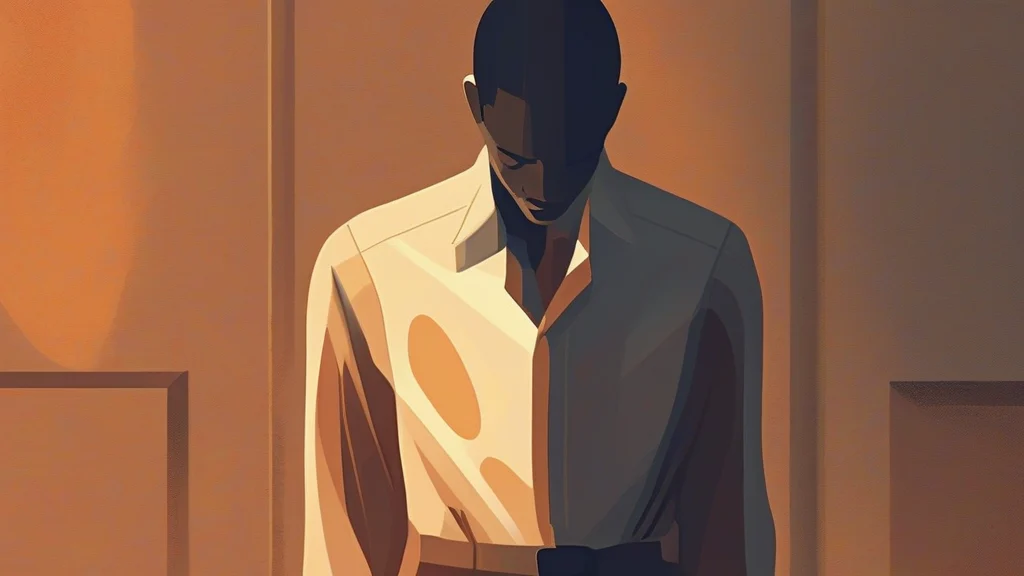
What does unbuttoning mean?
Unbuttoning is the act of releasing buttons, as when someone opens a shirt, jacket, or coat. The present-participle form is also used directly with a garment, as in “unbuttoning her coat,” where it describes an action in progress. In figurative contexts, unbuttoning describes a movement away from formality, restraint, or strict regulation, often concerning a person, organization, or social setting. The image is deliberately physical: something fastened is gradually loosened, and the change may be modest, informal, or gradual rather than sudden. Although the literal action is ordinary and usually neutral, the figurative expression can imply relaxation, informality, or a loosening of previously strict boundaries. Unbuttoning is therefore useful not only for describing a familiar physical gesture but also for characterizing cultural, institutional, or personal changes in tone and openness.
nounThe act of undoing the fastenings of a garment by releasing its buttons. Figuratively, a process of becoming less formal, constrained, or restrictive.
- The physical action of releasing the buttons of a garment or other fastening.
- A figurative process of becoming less formal, constrained, or restrictive.
"She began unbuttoning her coat as soon as she reached the office."
"He was unbuttoning his shirt when the phone rang."
"The speech was widely described as an unbuttoning of the organization's previously cautious public image."
The plural is grammatically possible but uncommon because the word is normally used in the singular or as a verbal noun.
"The repeated unbuttonings of the old coat became part of the evening's ritual."
One small gesture can turn a formal look into a relaxed one.
Reviewed by Deb Chak, Editor. AI-assisted content curated by RJS Tech Solutions LLP.
Where does unbuttoning come from?
“Unbuttoning” is an English formation combining the prefix un-, meaning “to undo or reverse,” with button and the verbal suffix -ing. The underlying verb “unbutton” developed from “button,” a word borrowed from Old French bouton, an older term for a knob or protruding fastening. The same root underlies button, buttoned, buttoning, and buttoner. The gerund form “unbuttoning” has naturally developed both a literal meaning and a figurative use based on the idea of loosening what has been fastened.
Related word forms
How unbuttoning is actually used
The literal term is neutral and common in everyday English. Its figurative use is more literary, political, or journalistic, suggesting the removal of restrictions or a less formal atmosphere.
Easily confused with unbuttoning
“Unbuttoning” names the action of releasing buttons, whereas “unbuttoned” describes the resulting state.