
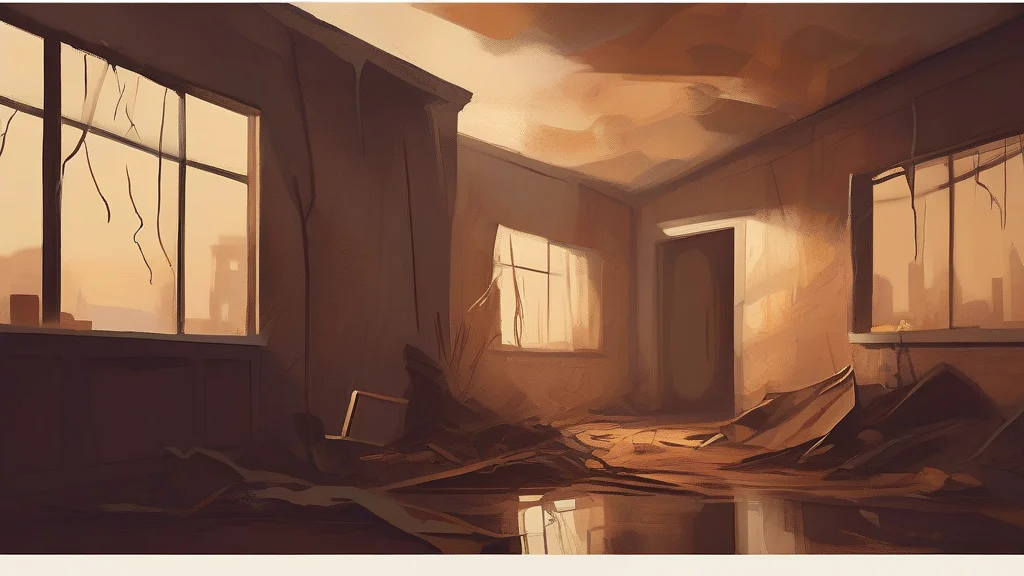
What does unkemptly mean?
Unkemptly is an adverb meaning in a disorderly, untidy, or poorly arranged way. It most often describes hair, clothing, gardens, rooms, or other visible features that have not been neatly groomed or arranged, although it can apply more broadly to any careless or messy condition. For example, a scarf may hang unkemptly, while an abandoned garden may grow unkemptly. The word often conveys an impression of neglect or lack of attention to appearance, but it can also describe something naturally irregular rather than badly maintained. It is more literary and vivid than the plainer “untidily,” and its mildly critical connotation depends on context. Unkemptly is especially useful when the speaker wants to evoke a strong visual impression of disorder. The form also preserves an older word within it: “kempt,” once meaning combed or neatly arranged, survives mainly in the negative compound “unkempt.” Today, the adverb is understood in both British and American English and appears in descriptive prose, fiction, and ordinary conversation.
adverbIn an unkempt manner; in a disordered, untidy, or poorly arranged way, especially of hair or appearance.
- In a disordered, untidy, or poorly arranged manner, especially of hair, clothing, or appearance.
"Her scarf hung unkemptly around her neck."
"Her scarf hung unkemptly around her neck."
"The abandoned garden had grown unkemptly over the years."
A neatly combed past is hiding in “unkemptly”: the word ultimately combines “un-” with the old word “kempt,” meaning combed or neatly arranged.
Reviewed by Deb Chak, Editor. AI-assisted content curated by RJS Tech Solutions LLP.
Where does unkemptly come from?
The adverb was formed from the adjective “unkempt” by adding the suffix “-ly.” Historically, “unkempt” combines the prefix “un-” with the now archaic “kempt,” meaning combed or neatly arranged; “kempt” in turn comes from “comb.” The adjective “uncombed,” which carries a similar older sense, reflects the same long-established root.
How unkemptly is actually used
Descriptive rather than slang, but often somewhat literary. It can suggest carelessness, neglect, or dishevelment, although it may also describe a naturally irregular or informally arranged appearance.
Easily confused with unkemptly
“Unkempt” is the adjective describing a disordered or untidy condition, while “unkemptly” is the adverb describing how something is done.