
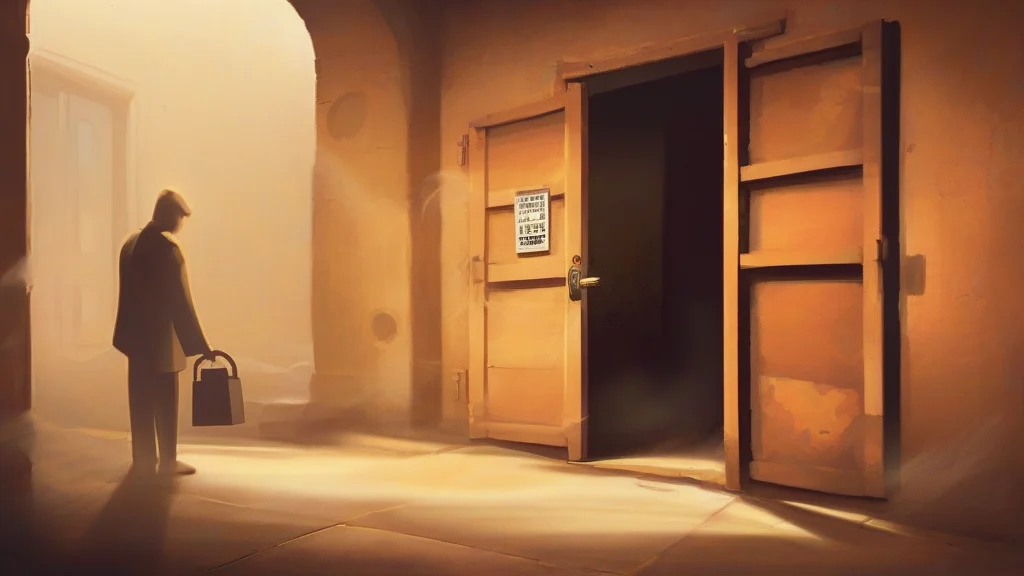
What does unlocked mean?
Unlocked is an adjective and a past-tense form of the verb unlock. In its most direct sense, it describes a door, window, container, or other fastening mechanism that is not secured and can therefore be opened. It can also be used metaphorically for a feature, setting, or resource that is available without a lock, payment, subscription, or other restriction. In ordinary conversation, an unlocked door may suggest that the occupants forgot to secure it, although the word itself carries no negative judgment. As the past participle of unlock, it can describe an action that has just taken place: a technician unlocks the panel and leaves the mechanism unlocked for inspection. Overall, unlocked conveys the idea of release, access, and freedom from restriction, while its precise meaning depends on whether it refers to something physical, digital, or figurative.
Not locked; open, released, or accessible without a fastening or restriction.
"The unlocked gate swung gently in the wind."
Figurative uses commonly refer to content, features, or opportunities that are available without restriction.
The simple past tense and past participle of unlock, meaning to open or release something secured by a lock.
"She unlocked the door and stepped inside."
The form may also function as a participle in phrases such as “remain unlocked” or “left unlocked.”
The same idea moves from a door bolt to a phone screen: both can be locked or unlocked.
Reviewed by Deb Chak, Editor. AI-assisted content curated by RJS Tech Solutions LLP.
Where does unlocked come from?
Unlocked is formed from the prefix un-, meaning “not” or the reversal of an action, and the verb lock. The verb lock descends from Old English loc, and related forms survive in cognates such as German Schloss and Dutch slot. The combination in unlock is an English formation for undoing the action of locking, while unlocked is its straightforward past-tense and past-participle form.
Related word forms
How unlocked is actually used
The word is neutral in register and can describe a physical state, a technological setting, or access to content. Its figurative use often implies that something is freely available rather than protected by restrictions.
Easily confused with unlocked
Locked means secured or closed with a lock, whereas unlocked means released from that secured state.