
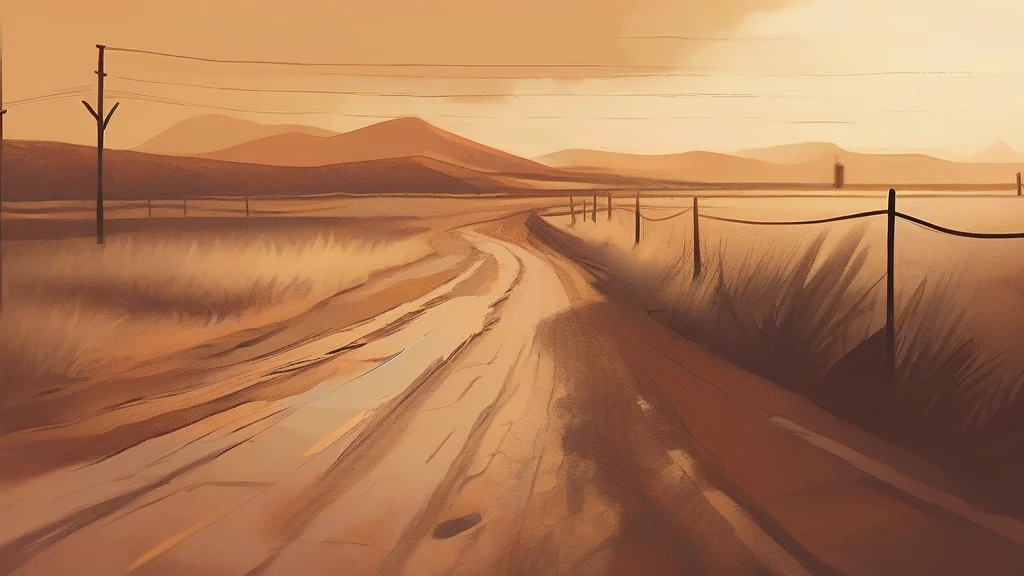
What does unpaved mean?
Unpaved describes a road, path, street, or other surface that lacks a hard covering such as asphalt, concrete, or paving. Such surfaces may consist of packed earth, gravel, grass, sand, or a mixture of natural materials. The word is especially useful when the type of surface matters: an unpaved route may be picturesque or historically significant, but it can also be rough, dusty, muddy, or slow to travel. In ordinary speech, the term commonly evokes rural roads, footpaths, and less-developed areas, although it is equally applicable in technical, geographical, and administrative contexts. It is standard in both British and American English. Unlike the neutral term unpaved, words such as dirt or gravel can suggest particular materials rather than simply the absence of a paved surface. The opposite is paved, while surfaced and metalled are more formal alternatives in some contexts.
adjectiveNot covered with a hard surface such as asphalt, concrete, or paving. An unpaved road or path consists of earth, gravel, grass, or another natural material.
- Not covered with pavement, asphalt, concrete, or another hard surface; consisting of earth, gravel, grass, or similar material.
"The unpaved road became difficult to drive along after several days of rain."
"Local residents complained that the unpaved street was too rough for buses."
"We followed an unpaved track through the forest to the old farm."
Unpaved is built in plain sight: un- means “not,” and paved names the surface it denies.
Reviewed by Deb Chak, Editor. AI-assisted content curated by RJS Tech Solutions LLP.
Where does unpaved come from?
Unpaved is an English formation combining the negative prefix un- with paved, so its literal sense is “not paved.” Pave was borrowed into English during the Middle English period through Anglo-French and ultimately comes from Latin. Related English forms such as pavement and paving belong to the same lexical family, while the productive un- prefix supplies the opposite meaning.
How unpaved is actually used
Most common in descriptions of roads, paths, streets, and other surfaces. It can suggest a rural or less-developed setting, but it is neutral and suitable for both informal and formal writing.